

What Is Weighted Ball Training for Baseball?
Posted by Editorial Team on 2026 Nov 7th
Last Updated: November 7, 2026
Quick Summary
Weighted ball training is a practice where players throw baseballs heavier or lighter than a regulation ball to build arm speed and strength through controlled, repeated throws. Coaches use these balls to change how the arm moves during a throw.
- Heavier balls load the shoulder and arm muscles, while lighter balls are often used for overspeed throwing drills.
- Weighted-ball sessions count toward total weekly throwing volume and should be balanced against bullpens, long toss, and games.
- Keep weighted-ball sessions short, often 10 to 20 minutes, and skip them in the 48 hours before a game start.
- Stop training and rest for sharp or persistent shoulder or elbow pain, loss of control, or soreness lasting more than a day or two.
Table of Contents
- What Weighted Ball Training Is and Why Players Use It
- How Weighted Balls Fit Into Baseball Training
- What Weight of Weighted Baseballs Should You Use?
- Weighted Ball Drills for Baseball Players
- Building a Weighted Ball Training Program for Pitchers
- Weighted Ball Training Risks and When to Pause
- Choosing Your First Weighted Ball Set
- Frequently Asked Questions
What Weighted Ball Training Is and Why Players Use It
Weighted ball training is a practice where players throw baseballs that weigh more or less than a regulation ball. Dubs Baseball sells weighted ball sets for this purpose. The goal is simple: build arm speed and strength through controlled, repeated throws.
A weighted ball is a baseball made heavier or lighter than the standard 5-ounce ball. Coaches use them to change how the arm moves during a throw.
Players use weighted balls for a few main reasons:
- Strength: Heavier balls load the shoulder and arm muscles.
- Speed: Lighter balls are often used for overspeed throwing drills.
- Feel: Players learn how their arm should move under different loads.
Many players start with a set of several weights so they can progress over time. Our [PRODUCT_LINK: DWB-PP Real Leather Weighted Ball Set | dubsbaseball.com] includes six weights: 3, 4, 6, 7, 9, and 11 ounces.
How Weighted Balls Fit Into Baseball Training
Weighted balls work best as one part of a larger training plan. They do not replace long toss, bullpens, or game-based practice.
A useful way to think about it is that every throw, weighted, long toss, bullpen, game, counts toward the same weekly throwing volume. For age-specific progressions and stop rules, see complete safety guide. Weighted-ball sessions are not "free" throws. They load the arm, so they have to be counted and balanced against the rest of the throwing week.
A general pattern for coordinating weighted-ball work with the rest of a throwing week:
- Place weighted-ball work on a low-stress throwing day. Many programs schedule it on a day that is not adjacent to a bullpen or a game start, so the arm has recovery room on both sides.
- Do weighted-ball work before the main throwing session, not after. The throws are short and focused on quality, and the arm is freshest earlier in the session.
- Keep sessions short, often 10 to 20 minutes. Volume is deliberately low because the intent is high.
- Reduce or skip weighted-ball work in the 48 hours before a game start. The arm needs to be fresh for competition, and heavy-ball work is not a pre-game activity.
- Coordinate with strength training. Heavy-ball throws and heavy lifting on the same day stack stress on the shoulder and elbow; many programs separate them by a day or pair light-ball work with lifting instead.
- Protect at least one full rest day per week from all throwing. Weighted balls should not fill a rest day.
Watch out: Adding weighted-ball sessions on top of an unchanged bullpen, long-toss, and game schedule is the most common way players accumulate excessive workload. If a weighted-ball block is added, something else in the throwing week usually needs to come down.
Age and experience change the picture. Youth players should generally keep weighted-ball work light, infrequent, and closely supervised, and should follow pitch-count and rest rules for games first.
Finally, weighted-ball work is not a substitute for long toss or mechanical work. Long toss builds arm strength through distance and arc; weighted balls build arm speed and strength through load. The two complement each other when sequenced, and conflict when stacked on the same day at high intent.
What Weight of Weighted Baseballs Should You Use?
Choosing a weight depends on age, experience, and goals. If you are still unsure whether weighted balls are worth buying, read how to decide if they are worth it. Younger players and beginners should start with lighter balls and build up gradually.
Ball weight is only one variable. Frequency, intensity, and recovery matter just as much.
Weighted Ball Drills for Baseball Players
Common drills include wall throws, step-behind throws, and short catch-and-throw patterns. For weight selection and a full throwing routine, see plyo ball training guide. Each drill uses a specific weight and distance.
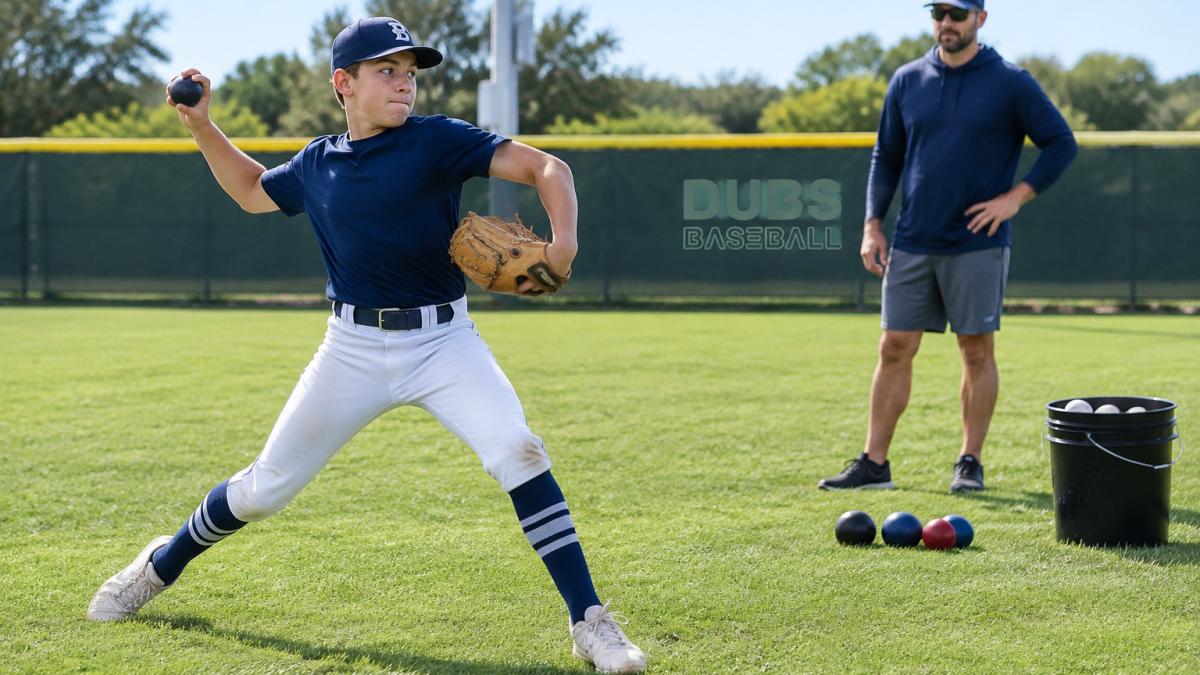
A youth pitcher might warm up with a lighter ball on a grass field while a coach watches the throwing form. Simple drills like these help players learn control before adding intensity.
Focus on smooth mechanics first. Speed should come from good movement, not forcing the throw.
The article's drills rely on specific weights and distances, which are summarised below.
| Drill | Purpose | Key detail |
|---|---|---|
| Wall throws | Control and mechanics | Uses a specific weight and distance |
| Step-behind throws | Control and mechanics | Uses a specific weight and distance |
| Short catch-and-throw | Control and mechanics | Uses a specific weight and distance |
| Light-ball warm-up on grass | Control before intensity | Coach watches throwing form |
Building a Weighted Ball Training Program for Pitchers
A good program starts with a baseline and a screen, not with a ball. Read whether weighted balls suit beginner pitchers before you begin. Before the first weighted-ball session, most practitioners recommend confirming three things: the player is pain-free, has a recent throwing base (weeks of consistent catch play, not a cold start), and has a plan for how weighted-ball work fits the rest of the throwing week. A player coming off a shoulder or elbow injury, or one who has not thrown regularly, should get clearance from a qualified medical professional before starting.
Here is a staged progression that works for an experienced pitcher. It is a template, not a prescription, adjust volume to the player's age, experience, and team schedule.
Stage 1, Baseline and light-ball introduction (weeks 1-2).
- Start with a regulation 5-ounce ball and light throws to establish a baseline.
- Add one session per week using a lighter ball (around 3-4 ounces) for short, low-volume throws.
- Keep total throws per session modest, often 20 to 30 throws, and stop while the arm still feels good.
- Log ball weight, throw count, distance, and how the arm feels the next day.
Stage 2, Adding load (weeks 3-4).
- Add a second weekly session only if the arm has recovered well from Stage 1.
- Introduce a heavier ball (around 6-7 ounces) for a small number of throws, paired with light-ball overspeed throws.
- Keep the heavier-ball throws short in distance and low in count; the intent is quality, not volume.
- Continue logging; watch for soreness that lasts more than a day or two.
Stage 3, Integrated block (weeks 5-8).
- Run two weighted-ball sessions per week, sequenced around bullpens and games as described above.
- Use a range of weights, light for overspeed, mid for general load, heavy for strength, rather than one ball.
- Re-test the baseline (distance, velocity, command, recovery) at the end of the block.
- Deload or pause if soreness, command loss, or mechanical breakdown appears.
A youth or beginner version of this progression should stay in Stage 1 far longer, use lighter balls, and keep sessions supervised. High-school and college pitchers can move through the stages faster but still need the workload coordinated with their team schedule. Adult and recreational players often do best with a short, repeatable block rather than a long, high-volume program.
Measuring Progress Beyond Radar-Gun Velocity
Radar guns measure only one number, and velocity can move for reasons unrelated to the program. Players can also track throwing accuracy, consistency, recovery time, and how their arm feels after sessions.
Keep a simple log with four columns: ball weight, number of throws, distance or intent, and next-day arm status. Over time, this shows real progress better than velocity alone.
Watch out: Chasing a velocity number while ignoring command, recovery, and soreness is the most common way a weighted-ball block goes wrong. If any of those three regress, treat it as a signal to reduce volume or pause, not to push harder.
Weighted Ball Training Risks and When to Pause
Weighted ball training carries risk, especially for young players.
Stop training and rest if you feel:
- Sharp or persistent pain in the shoulder or elbow
- Loss of control or mechanics that break down
- Soreness that lasts more than a day or two
Consult a qualified medical professional if pain continues. Official guidance on youth throwing workloads is available from USA Baseball pitch count guidelines.
Choosing Your First Weighted Ball Set
A first set should cover several weights so you can progress safely. You can see the full range in the six-weight leather set. Look for durable materials and a set that fits your training goals.
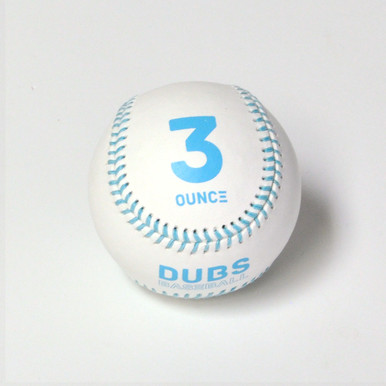
Our [PRODUCT_LINK: DWB-PP Real Leather Weighted Ball Set | dubsbaseball.com] covers 3, 4, 6, 7, 9, and 11 ounces. For a plyo-ball option, the [PRODUCT_LINK: DPB-6PAC Pitchers Plyo Ball Set | dubsbaseball.com] is sold as a set of six in a mesh carry bag.
Pricing depends on quantity and current promotions, so check Dubs Baseball's website for a current quote.
Dubs Baseball equipment is built for players who want steady, measurable progress. If you are ready to start, [add the weighted ball set to your cart | dubsbaseball.com] and build a plan that fits your player.
Frequently Asked Questions
Why use weighted balls in baseball?
Players use weighted balls to train arm speed, strength, and throwing mechanics. Lighter balls, often called overload or overspeed balls, are thrown faster than normal to encourage quicker arm action. Heavier underload balls build strength through the throwing motion. Because weighted balls differ from regulation baseballs, they add a training stimulus that regular practice balls do not provide. Results depend on how consistently and carefully the program is followed, and players should check with a coach or medical professional before starting.
What weight of weighted baseballs should I use?
Most programs use a range of weights rather than one ball. Dubs Baseball sells weighted balls from 3 oz. up to 11 oz. in its real leather set, and plyo balls from 3.5 oz. to 35 oz. A common approach is to start with a ball close to regulation weight, around 5 oz., and only move to lighter or heavier balls once throwing feels controlled. Younger players and beginners should start lighter. For specific weight recommendations for your player, pricing, or quantity for a team, check the Dubs Baseball website or contact the company directly.
Are weighted baseballs safe for youth players?
Weighted ball training carries injury risk, particularly to the shoulder and elbow, and youth players have growing bodies that need careful loading. Safer use means starting with a supervised, low-volume progression, prioritizing a full warm-up, and stopping at any sign of pain. Players with a recent arm injury, or who are not yet throwing regularly, should avoid this training until cleared by a qualified medical professional. Parents and coaches should treat weighted ball work as a structured program rather than an add-on.
How often should pitchers train with weighted balls?
Frequency depends on the player's age, experience, and total throwing workload. Many beginner programs use weighted balls two to three times per week on non-game days, with rest between sessions for recovery. Advanced athletes may train more often under coach supervision. Weighted ball sessions should be counted as part of total throwing volume, so a player who throws a heavy game schedule needs less added training. Adjust frequency whenever soreness or fatigue appears.
