

How to Use Weighted Baseballs Safely: A Complete Guide
Posted by Editorial Team on 2026 Oct 18th
Table of Contents
- Weighted Baseball Safety: The Non-Negotiables
- Weighted Baseball Drills for Throwing and Pitching
- Building a Weighted Baseball Throwing Program
- Weighted Baseballs for Youth Pitchers: Age-Specific Guidance
- Weighted Baseball Workout Frequency and Recovery
- Stop Rules and Warning Signs: When to Shut It Down
- Choosing the Right Weighted Baseball and Equipment
- Conclusion
- Frequently Asked Questions
Last Updated: October 19, 2026
Weighted Baseball Safety: The Non-Negotiables
Weighted baseballs are baseballs that weigh more or less than the standard five-ounce regulation ball, and they are used to build arm strength, refine throwing mechanics, and add pitching velocity.
Here is the core tension most guides skip. Weighted baseballs are a tool for loading the arm more than a game ball does. Load is the whole point, and load is also the whole risk.
Before we go further, understand this: no piece of equipment replaces a coach's eyes or a trainer's judgment. If you are learning how to use weighted baseballs safely, the answer is not a single ball weight or a magic drill.
Below, we cover the drills, the throwing program, youth-specific guidance, and the warning signs that mean shut it down today.
How Weighted Baseballs Differ from Regulation Baseballs
A regulation baseball weighs five ounces. Dubs Baseball's real leather weighted ball set runs from 3 oz. to 11 oz., and our pitchers plyo ball set goes from 3.5 oz. all the way to 35 oz.
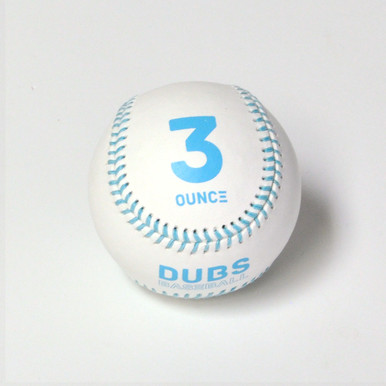
That spread matters. A lighter ball teaches the arm to move fast. A heavier ball forces the arm to handle more load at slower speeds. Both are useful, and both stress the arm differently than a five-ounce ball does.
The mistake is treating a weighted ball like a practice baseball. It is not. It is a training tool with a dose, and the dose is measured in throws, weight, and recovery.
The Real Risks: Arm Stress and Injury
The main risk with weighted baseballs is arm stress that outpaces the arm's ability to recover. Heavier balls increase the load on the shoulder and elbow. Lighter balls let you throw at higher intent, which also adds stress. Either way, the arm takes on more than a normal catch session delivers.
Many coaches find that problems start with volume, not weight. Too many throws, too many days, too little rest. The arm never gets the recovery window it needs, and small irritation builds into something bigger.
A common mistake is chasing velocity with weighted balls every single session. In practice, this means the arm is always loaded and never fresh. That is a recipe for a breakdown, not a breakthrough.
Weighted Baseball Drills for Throwing and Pitching
The best weighted baseball drills are simple, controlled, and easy to coach. You do not need a complex circuit. You need a few drills done with clean mechanics and full attention.
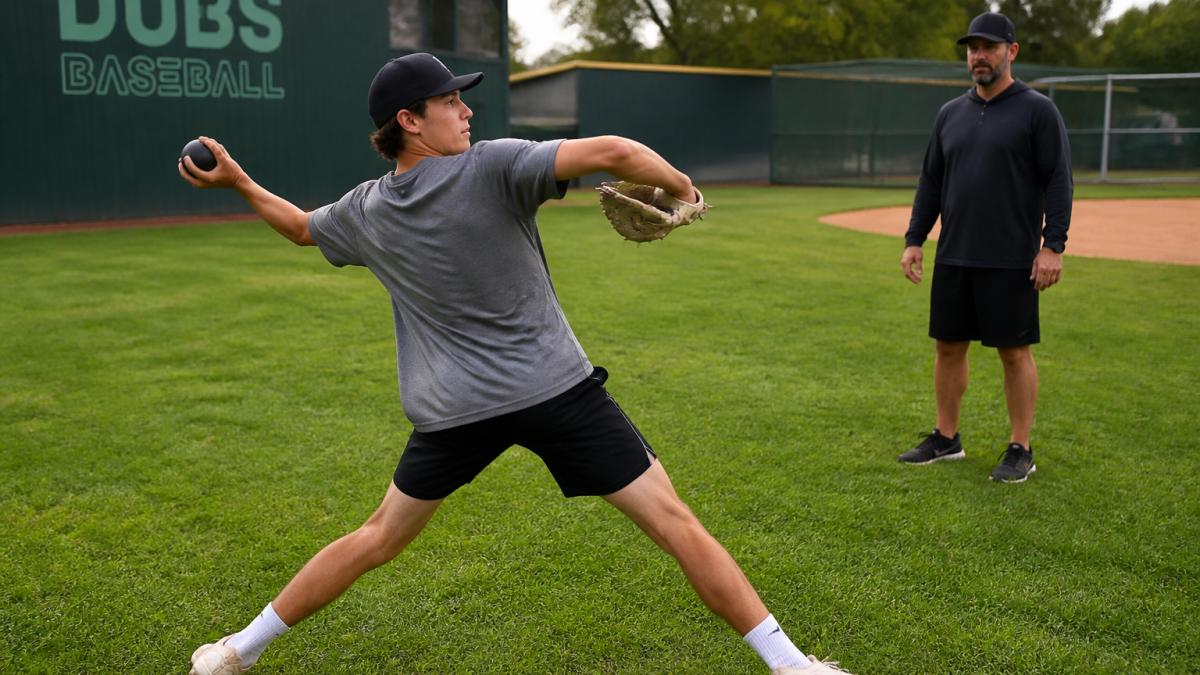
Start with a reverse throw. The player stands with the throwing shoulder facing the target, then works through the throwing motion from the back side forward.
Next, the walk-through drill. The player takes a small step forward as they throw, letting the lower body lead the arm.
Then add holds. The player pauses at key points in the throwing motion, like the cocked position, to feel where the arm should be. Holds build body awareness.
For hitters, weighted baseballs serve a different purpose.
Reverse Throw and Walk-Through Drills
Run these two drills as a pair, early in a session, when the arm is fresh. Do two sets of five to eight reps each with a light ball. Rest a minute between sets. Stop the drill the moment mechanics get sloppy, because sloppy reps teach sloppy patterns.
Building a Weighted Baseball Throwing Program
A weighted baseball throwing program should progress from light to heavy and from low effort to higher effort, over weeks, not days. The body adapts to gradual loading. It breaks down under sudden loading.
Here is a beginner progression you can run. It assumes a healthy arm and a player who has been throwing regularly.
| Phase | Duration | Ball Weights | Volume | Effort |
|---|---|---|---|---|
| Base | Weeks 1-2 | 3 oz. and 4 oz. | 20-30 throws per session | 50-60% |
| Build | Weeks 3-4 | 3 oz. to 6 oz. | 30-40 throws per session | 60-70% |
| Load | Weeks 5-6 | 4 oz. to 9 oz. | 30-40 throws per session | 70-80% |
| Maintain | Week 7 on | Full set | 25-35 throws per session | 60-80% |
A few rules sit on top of that table:
- Always start a session with the lightest ball and work up.
- Never finish a session with the heaviest ball at max effort.
- Keep at least one full rest day between weighted throwing sessions.
- Cut volume before you cut rest.
The progression is a template, not a law. A player coming off a long layoff starts at the base phase and stays there longer. A player in the middle of a heavy game schedule may skip the load phase entirely.
Weighted Baseballs for Youth Pitchers: Age-Specific Guidance
Weighted baseballs for youth pitchers need more caution than adult programs, not less. Young arms are still growing, and growth plates are more vulnerable to repeated stress than mature tissue (Overuse Injuries in Children - OrthoInfo).
The guiding principle is simple: lighter balls, lower volume, more supervision. A young player should not be running a self-designed weighted ball program. A coach or qualified trainer should set the plan and watch the reps.
DWB-PP - Real Leather Weighted Ball Set - 3oz., 4oz., 6oz., 7oz., 9oz., 11oz. →
Age-specific guidance we would give any parent or youth coach:
- Under 12: keep weighted work minimal and light. Focus on throwing mechanics and general athletic movement. Heavier balls add risk with little payoff at this age.
- 12 to 14: introduce light weighted balls under supervision. Keep volume low and effort controlled. Watch for growth-spurt changes in coordination.
- 15 and up: a structured program makes more sense, still with a coach setting volume and rest.
Growth spurts deserve a mention. When a young player shoots up in height, coordination often lags for a few months. That is a bad time to push heavy loading. Pull back, keep mechanics clean, and let the body catch up.
Weighted Baseball Workout Frequency and Recovery
Weighted baseball workout frequency should stay low enough that the arm is fully recovered before the next session. For most players, that means two to three weighted sessions per week, with at least one full rest day between them.
Recovery is not a bonus. It is when the arm actually gets stronger. The training session is the stimulus. The rest is where adaptation happens. Skip the rest and you skip the gain.
Signs the arm needs more recovery:
- Soreness that lingers more than a day or two
- Throws that feel flat or slow compared to normal
- A drop in accuracy that was not there before
- Reluctance to throw, or a feeling of heaviness in the arm
When you see these, cut volume and add rest. Do not push through. The American Academy of Orthopaedic Surgeons publishes patient guidance on throwing injuries and overuse that is worth reading alongside any program.
Stop Rules and Warning Signs: When to Shut It Down
Stop rules are the most important part of any weighted ball program, and the part most players skip. Decide the stop rules before the session starts, when the arm is fresh and judgment is clear.
Shut the session down immediately if you see:
- Sharp or pinpoint pain in the shoulder or elbow
- Pain that gets worse with each throw
- A loss of velocity that does not come back after rest
- Numbness or tingling in the hand or fingers
- A pop or sudden sensation in the elbow
- Mechanics that fall apart and will not reset
Any of these means stop for the day. Pain that persists past a day or two, or any numbness or tingling, means see a doctor before throwing again. That is not a coaching decision. It is a medical one.
A return-to-throw plan after an injury should come from a doctor or physical therapist, not from a training video. The National Athletic Trainers' Association offers resources on safe return-to-play practices that coaches can use to support that plan.
Choosing the Right Weighted Baseball and Equipment
Choosing the right weighted baseball comes down to three things: the weight range, the material, and how the ball feels in the hand. You want a range of weights, not a single ball.
A few selection rules:
- Beginners: start with a light set, 3 oz. to 6 oz., and add heavier balls later.
- Pitchers: a full range from light to heavy supports both speed and load work. Our DWB-PP Real Leather Weighted Ball Set covers 3 oz. through 11 oz. and comes with a carry bag.
- Arm care and drill work: a plyo set with molded seams gives a realistic grip for drills and throwing patterns. Our Pitchers Plyo Ball Set runs from 3.5 oz. to 35 oz. as a set of six.
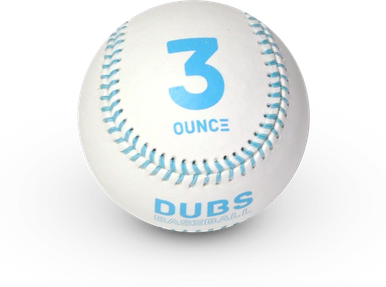
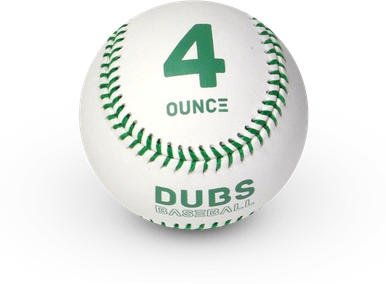
- Single-weight needs: if you just need one ball for a specific drill, single weights like our 3 oz. and 4 oz. real leather balls work well for light work.
Material matters for feel and durability. Real full-grain leather gives a grip closer to a game ball, which helps players carry mechanics from drills into games.
One honest limitation: a set is an investment, and a player who is not committed to a throwing program will not get much from it.
Durability matters most for teams and academies buying for a group. Leather balls that hold their shape survive a season of team drills far better than cheap synthetic ones.
Conclusion
The challenge with weighted baseballs is not access. It is discipline. The players who get the most from them are the ones who follow a progression, respect rest days, and stop the moment the arm says stop.
Dubs Baseball builds equipment for that kind of training. Our real leather weighted ball sets give you a full weight range for controlled progressions, our plyo balls support arm care and drill work with a realistic grip, and our gear is built to hold up through a full season of team use. Add to Cart and start your program the right way, with the right weights and the right plan.
Frequently Asked Questions
Are weighted baseballs safe for pitchers?
Weighted baseballs can be safe when used with a structured program, proper warm-up, and strict volume limits. The risk comes from overuse, poor mechanics, or jumping to heavy balls too soon. Always start with lighter weights, never throw weighted balls at maximum effort without supervision, and stop immediately if you feel arm fatigue or pain. Individual screening and return-to-throw considerations are essential before starting any weighted baseball program.
How should beginners start using weighted baseballs?
Beginners should start with a light 3 oz or 4 oz ball and focus on mechanics, not velocity. Begin with 10 to 15 throws at 50 to 60 percent intensity, three times per week, and gradually increase volume over several weeks. Always complete a full warm-up with a regulation 5 oz baseball first. A complete beginner progression includes two weeks of light tossing, then adding a 6 oz ball for short-toss drills. Never rush the progression; the goal is arm adaptation, not immediate power gains.
How often should pitchers throw weighted baseballs?
Most pitchers should limit weighted baseball workouts to two or three times per week, with at least one full rest day between sessions. High-intensity weighted ball work should not exceed two sessions per week during the season. Off-season programs can handle three sessions weekly with careful monitoring of arm fatigue. Always separate weighted ball days from heavy pitching days and follow a throwing program that includes recovery days. Youth pitchers need more rest: no more than two light sessions per week.
What drills can you do with weighted baseballs?
Common weighted baseball drills include reverse throws (throwing backward to reinforce arm path), walk-throughs (step-through throwing for momentum), pivot picks, and wrist flips. These drills target throwing mechanics, arm strength, and pitching-specific movement patterns. Use lighter balls (3 oz to 6 oz) for mechanical drills and heavier balls (7 oz to 11 oz) for strength work. Always perform drills with coach supervision and stop if mechanics break down or fatigue sets in.