

Weighted Equipment for Baseball Player Development: Ultimate Guide
Posted by Editorial Team on 2026 Nov 5th
Last Updated: November 5, 2026
Quick Summary
Weighted equipment for baseball is training gear, such as weighted baseballs, plyo balls and weighted bats, that is heavier or lighter than standard game equipment. Used on a planned schedule, it helps players build arm strength, swing speed and mechanics.
- Start youth players with the lightest plyo balls and keep the focus on arm care and clean mechanics.
- Our leather weighted ball set runs from 3oz. to 11oz. and includes a black drawstring carry bag.
- The hitting plyo pack includes 4 balls each at 250g, 300g and 350g.
- Progress one variable at a time: change either weight or volume in a given week, not both.
- Stop weighted work for sharp pain, a drop in velocity, or a change in arm slot or mechanics.
Table of Contents
- What Weighted Equipment Is and How It Supports Player Development
- Weighted Baseballs and Plyo Balls: Types, Weights, and Uses
- Weighted Bats for Baseball: Swing Training and Bat Speed
- Matching Equipment to Age, Skill Level, and Training Goal
- Safe Use, Workload Limits, and Return-to-Throwing Considerations
- Baseball Training Equipment for Home Use
- Choosing Your Starting Weighted Equipment Set
- Frequently Asked Questions
What Weighted Equipment Is and How It Supports Player Development
Weighted equipment for baseball is training gear, such as weighted baseballs, plyo balls and weighted bats, that is heavier or lighter than standard game equipment. Used on a planned schedule, it lets players train arm strength, swing speed and mechanics. For the broader picture, our complete guide to weighted equipment for player development explains how these tools fit into a full development program.
Weighted equipment works by changing the load a movement must handle. A heavier ball asks the arm to produce more force through the same throwing path, while a lighter one lets a player work on speed and rhythm. Coaches use that contrast to build strength and control in the same program.
Many programs use weighted tools as one part of a broader development plan, alongside tee work, long toss and game-speed reps. The equipment is a supplement to skill work, not a replacement for it.
Weighted Baseballs and Plyo Balls: Types, Weights, and Uses
Weighted baseballs and plyo balls are the most common entry point. Both let a player train throwing patterns with a different load, but they differ in how they feel in the hand and how they are used in a session.
Weighted Baseballs for Pitching and Catching Drills
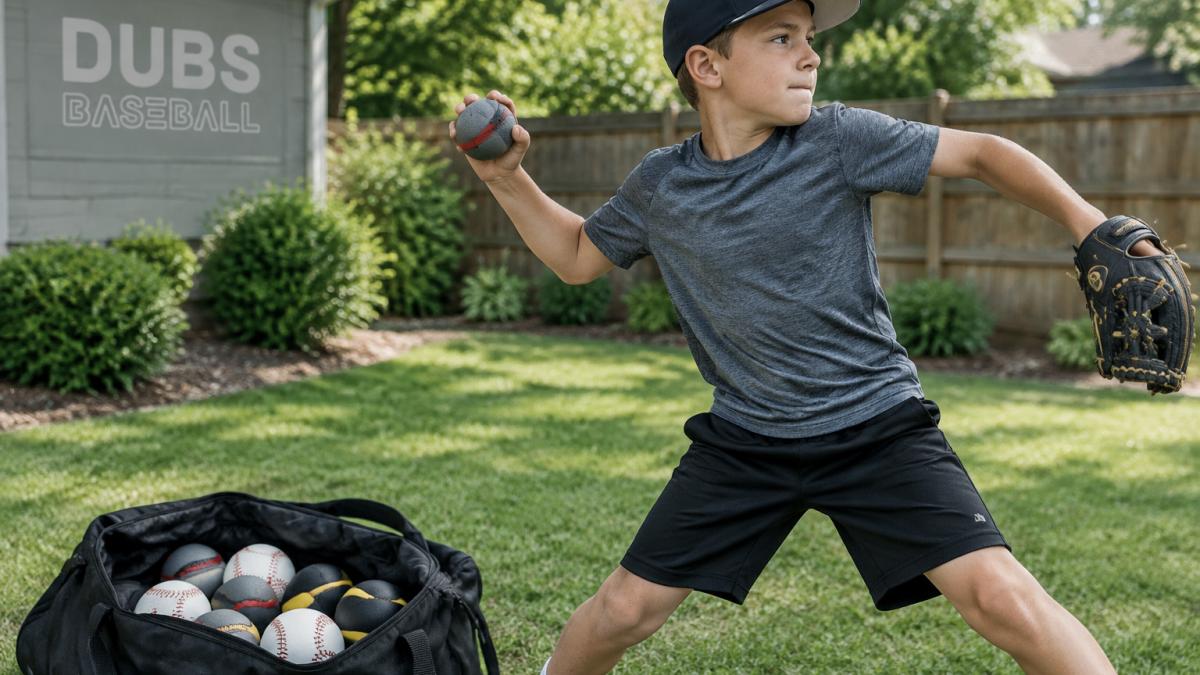
Our leather weighted ball set includes balls from 3oz. up to 11oz. and comes with a black drawstring carry bag.
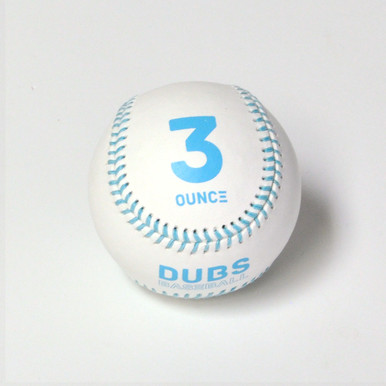
Coaches often use the lighter weights for warm-up and the heavier ones for targeted strength blocks. Keeping the progression gradual is the main way to avoid overloading the arm.
Plyo Ball Sets for Arm Care and Throwing Patterns
Plyo balls are built for controlled, repeated throwing patterns and arm care work. Our pitcher's plyo ball set comes in six weights and includes a carry bag. The seams are molded into the ball so the grip and hand feel stay realistic during drills, which matters when a player is repeating a pattern many times.
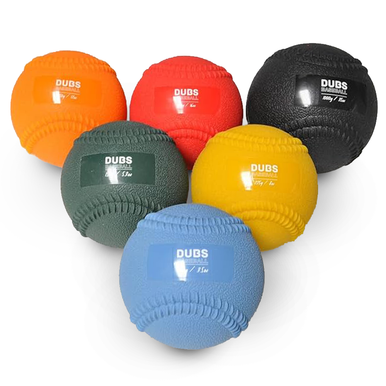
The article's key product specs for weighted baseballs and plyo balls are summarised below.
| Product | Weights | Included |
|---|---|---|
| Leather weighted ball set | 3oz. to 11oz. | Black drawstring carry bag |
| Pitcher's plyo ball set | Six weights | Carry bag |
| Hitting plyo pack | 250g, 300g, 350g | 4 balls per weight |
Weighted Bats for Baseball: Swing Training and Bat Speed
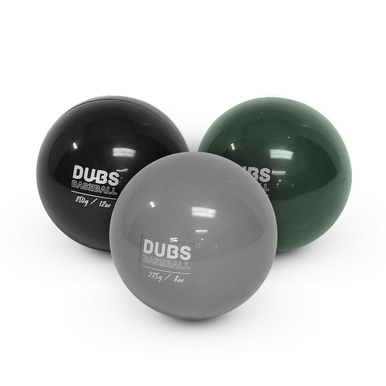
Our hitting plyo pack includes 4 balls each at 250g, 300g and 350g, and is suited to pre-game drills and hitting stations at indoor or outdoor practices.
Matching Equipment to Age, Skill Level, and Training Goal
Choosing a weight depends on the player's age and physical maturity, current throwing or hitting experience, and the specific skill being trained. The weight range that fits a 12-year-old learning a repeatable arm path is not the range that fits a varsity pitcher chasing velocity.
A practical selection framework
Use these bands as a starting point, then adjust for the individual. They reflect common practice among throwing and hitting coaches, not a rigid rulebook.
- Youth players (roughly 9-12) building a throwing base: start with the lightest plyo balls and a single light weighted ball, and keep the emphasis on arm care, catch play and clean mechanics. Heavier implements should wait until the throwing motion is consistent.
- Middle-school and early high-school players adding strength: a graduated plyo set that spans light to moderate weights lets a coach progress load over a season without buying again. Pair it with a standard ball for most reps.
- Experienced pitchers working on velocity: a full plyo set plus a leather weighted-ball set covering roughly 3 oz. to 11 oz. gives enough range for warm-up, strength blocks and recovery work. The heavier end is a targeted tool, not a daily default.
- Hitters training bat speed: a hitting plyo pack in the 250 g to 350 g range supports tee work and front toss, with a standard bat or weighted bat used for contrast swings.
Match the set to the training goal, not the label
Pitchers and hitters need different tools. A pitcher's plyo set is built around throwing patterns and arm care, and a hitting pack is built around swing load.
Position and movement considerations
Watch out: parents often buy the heaviest set on the shelf because it looks like the serious choice. Heavier is not better, the right weight is the one the athlete can move with clean mechanics, and a too-heavy set can stall development or invite injury.
A quick in-store checklist
Before recommending a set, confirm four things: the player's age and training age, the primary goal for the next 8-12 weeks, whether the player has a coach supervising weighted work, and whether the player is returning from a layoff or injury. Those four answers narrow the choice to one or two sets and give the customer a reason to trust the recommendation.
DWB-PP - Real Leather Weighted Ball Set - 3oz., 4oz., 6oz., 7oz., 9oz., 11oz. →
Safe Use, Workload Limits, and Return-to-Throwing Considerations
Weighted equipment adds stress to the arm and shoulder, so the specialty store's job is not just to sell the set but to explain how to use it without getting hurt. Most practitioners find that the programs that go wrong are the ones that increase weight or volume too fast, especially after a rest period. A simple, written protocol that travels with the product is a genuine differentiator.
Workload and progression rules
Treat weighted work as a planned load, not an add-on. A few principles cover most of the risk:
- Progress one variable at a time. Increase weight or volume, not both in the same week. A common pattern is to hold volume steady while moving up one weight, then hold the new weight for several sessions before adding reps.
- Keep heavy work short. Heavier implements are for targeted blocks of a few deliberate reps, not long sets. Form breaks down first, and that is the signal to stop.
- Separate hard throwing from heavy throwing. Avoid stacking a heavy weighted-ball session on top of a high-volume bullpen or game day. Space demanding days apart.
- Track the next-day response. Soreness that lingers or changes the throwing motion is a reason to back off, not push through.
Supervision and stop rules
Youth and less-experienced athletes should use weighted equipment under a coach's or qualified instructor's supervision. Write down stop rules and share them with the buyer: stop the session for sharp pain, a drop in velocity, a change in arm slot or mechanics, or fatigue that alters the throwing pattern. These rules are simple, but they are the difference between a training tool and an injury.
Return-to-throwing considerations
Watch out: a player who feels fine after a week of light throwing may want to jump straight back to heavy plyo work. That jump is where re-injury tends to happen, the return should be phased even when the arm feels good.
What the store should hand over
A short insert or digital guide covering progression, stop rules, supervision expectations and return-to-throwing steps turns a product sale into a safety relationship. It also gives staff a consistent script, so every customer hears the same guidance regardless of who is on the floor. Our complete guide to safe weighted-ball use covers age-based progressions, stop rules and workout frequency in more detail and can serve as the reference behind that handover.
Baseball Training Equipment for Home Use
Keep home sessions short, use the lighter weights first and avoid throwing at full intensity on days when the arm feels sore.
Choosing Your Starting Weighted Equipment Set
A pitcher's plyo set and a hitting plyo pack serve different training goals, so decide which one matches the main training focus first.
Pricing depends on quantity, dates, and delivery, so check the current prices on Dubs Baseball's website or request a quote before ordering for a team.
Frequently Asked Questions
What are weighted baseballs good for?
Weighted baseballs are used in throwing and catching drills to build arm strength and throwing mechanics. They are available in weights such as 3 oz., 4 oz., 6 oz., 7 oz., and 9 oz. in the product range.
What is player development in baseball?
Player development in baseball is the structured improvement of a player's skills, physical capacity, and mechanics over time. It covers hitting, pitching, fielding, and conditioning, and it usually follows a progression from fundamentals to more demanding training.
How are plyo balls different from weighted baseballs?
Plyo balls are seam-molded training balls designed for arm care and throwing patterns, and they are sold in sets with a range of weights. Weighted baseballs are real full grain leather balls used for catching and throwing training. Check each product listing for its specific weights and materials.
Do baseball players practice with weighted bats?
Weighted hitting balls are used in pre-game drills and at hitting stations for tee work and front toss at indoor or outdoor practices.
What baseball training equipment is useful for hitting and pitching practice?
Weighted plyo ball sets are used for pitching and throwing drills, and weighted baseballs are used for catching and throwing training. The range also includes weighted plyo and hitting balls for hitting stations.
How should players use weighted balls in a training routine?
Players typically use weighted balls in short, controlled sessions at the start of a throwing routine, moving from lighter to heavier balls as their arm adapts. Total throwing workload, rest days, and pain or fatigue should guide the plan. Young players and anyone returning from arm injury should follow a coach or medical professional's guidance before increasing volume. Keeping a simple log of sessions helps track progress.
Is lifting weights good for baseball players?
Strength training can support baseball performance when it is planned around the sport and the player's age.
