

Weighted Equipment for Player Development: A Complete Guide
Posted by Editorial Team on 2026 Oct 9th
Table of Contents
- How Weighted Equipment Enhances Player Development
- Benefits of Plyo Ball Training for Pitching and Hitting
- Weighted Baseball Training Drills and Sport-Specific Applications
- Best Practices for Resistance Training and Progressive Overload
- How to Use Arm Bands for Pitching Performance and Injury Prevention
- Safety, Age-Specific Programming, and Athlete Readiness
- Measuring Outcomes and Evaluating Performance Gains
- Frequently Asked Questions
Last Updated: October 9, 2026
How Weighted Equipment Enhances Player Development
Weighted equipment player development has become central to modern baseball training. When coaches and players integrate specialized weighted gear into their programs, they address multiple performance demands simultaneously: explosive power, speed, strength, and movement quality.
The science behind weighted training is straightforward. Adding resistance to throwing and hitting movements creates overload that builds strength and power. Remove the weight, and athletes experience improved speed and efficiency.
But here's what most programs get wrong: they add weight without strategy. Random heavy balls or vests don't produce results.
Benefits of Plyo Ball Training for Pitching and Hitting
Plyo ball training delivers specific benefits that regular baseballs cannot match. The weighted plyo balls used in pitching development force the arm to work against greater resistance, building strength through the entire throwing chain. For hitters, heavier balls during pre-game work prepare the body for game-speed fastballs and develop bat speed through increased load.
Explosive Power and Acceleration
Explosive power separates elite players from the rest. When a pitcher throws a weighted plyo ball, the arm must generate force against resistance.
This adaptation happens because muscles and tendons respond to progressive overload. Dubs Baseball's research on athletic adaptation shows that controlled resistance training increases rate of force development, the speed at which muscles generate power.
The key is matching load to the athlete's current ability. Too light and there's no stimulus. Too heavy and technique breaks down, which teaches poor movement patterns and increases injury risk.
Speed Development and Sprint Bursts
Speed in baseball isn't just about running fast in a straight line. It's about quick acceleration over short distances, first-step quickness, change-of-direction speed, and the explosive movements required during hitting and fielding.
Weighted training improves speed through a mechanism called post-activation potentiation. A heavy stimulus (like a weighted vest or resistance band work) temporarily increases the nervous system's readiness. Immediately after that heavy work, lighter movements feel faster and more explosive. This is why baseball programs use weighted equipment before game play: it primes the neuromuscular system for maximum speed.
Strength and Force Production
Strength is the foundation. Without adequate strength, athletes cannot produce power, maintain technique under fatigue, or resist injury. Weighted plyo balls and resistance training build the absolute strength needed for all other performance qualities.
The progression matters. A 10-year-old pitcher should never throw a 16oz ball. A 16-year-old might benefit from it. A professional pitcher uses it as part of a periodized program. The American Academy of Pediatrics guidelines on youth resistance training emphasize that strength training is safe and beneficial when age-appropriate and properly supervised.
Weighted Baseball Training Drills and Sport-Specific Applications
Sport-specific training means applying weighted equipment to the exact movements athletes perform in games. A pitcher doesn't need general arm strength, they need throwing strength. A hitter doesn't need general power, they need rotational power and bat speed.
Pitching Development Drills
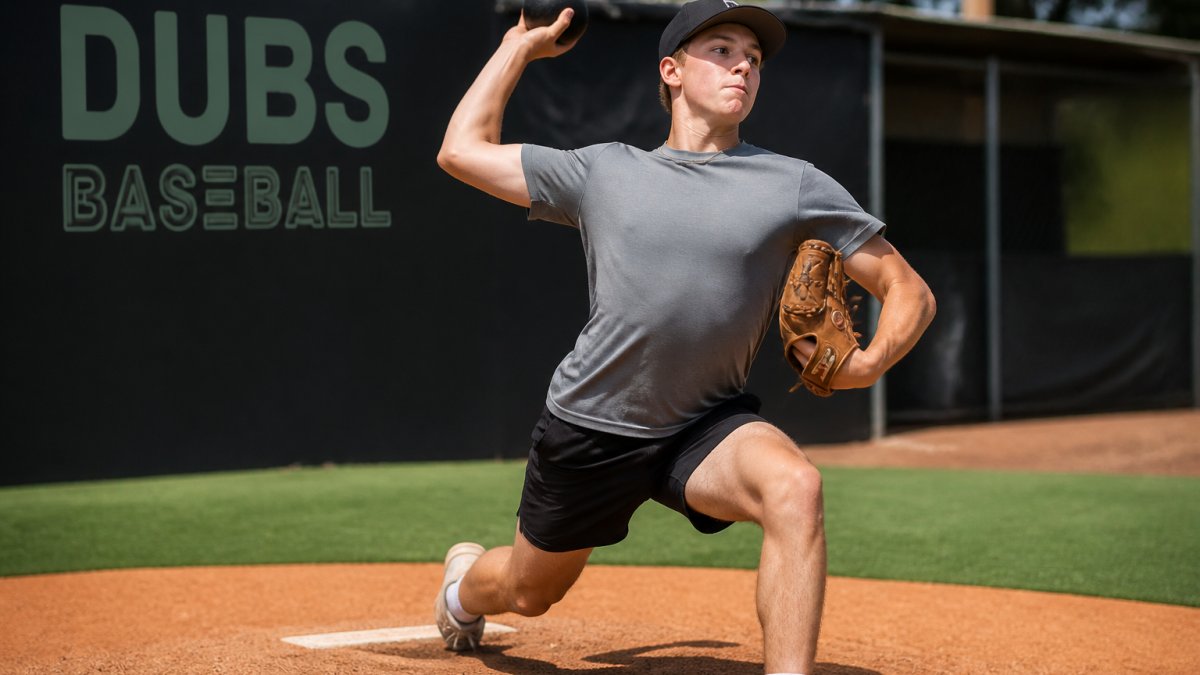
Pitching development with weighted equipment follows a simple structure: heavy work, then normal work, then competition. A pitcher might throw five 5.3oz plyo balls, then five regulation baseballs, then pitch in a game.
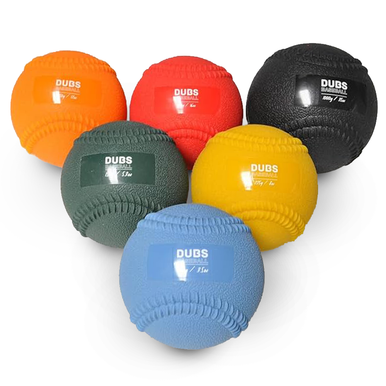
The Dubs Baseball Pitchers Plyo Ball Set comes in weights from 3.5oz to 35oz. Most youth pitchers work with 3.5oz to 8oz balls. The progression depends on age, current arm strength, and training experience.
The balls feature molded seams that replicate the grip and feel of a regulation baseball. This matters because technique must transfer.
Hitting Mechanics and Bat Speed Drills
Hitting benefits from weighted equipment in two ways: pre-game preparation and training load. Training load with weighted bats or heavier baseballs builds the rotational strength needed for power production.
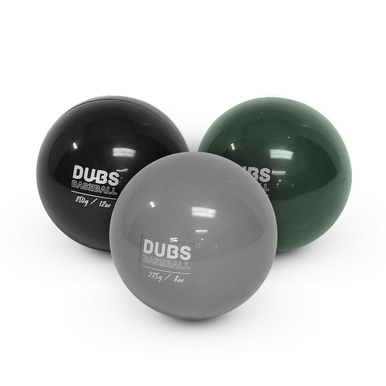
The Dubs Baseball Hitting Plyo Pack provides progression across three weights: 250g, 300g, and 350g balls. A hitter might use these in a tee work station or front toss drill before batting practice.
One effective drill: five swings with 350g balls, then five with regulation baseballs, then enter the cage. The contrast creates a speed advantage.
Agility, Footwork, and Coordination Work
Agility and footwork don't directly benefit from heavier baseballs, but they improve through weighted vests and resistance band work. A weighted vest increases the load during lateral movements, shuffle drills, and change-of-direction work. Remove the vest, and movements feel faster.
This applies to all baseball positions. Infielders need quick lateral movement and explosive changes of direction. Outfielders need acceleration and deceleration. Catchers need lower-body strength and stability. Weighted training develops the strength foundation these movements require.
Best Practices for Resistance Training and Progressive Overload
Progressive overload is the principle that drives all improvement. Without increasing stimulus over time, the body adapts and progress plateaus. The progression can come from more weight, more reps, more sets, or increased speed of movement. The key is intentional change.
Selecting Appropriate Resistance Loads
Load selection depends on four factors: age, training experience, current strength, and the specific goal. A beginner pitcher should start light. A advanced pitcher can handle heavier loads.
A practical framework: choose a weight where the athlete can complete the intended reps with good form. If form breaks down, the load is too heavy.
Age matters significantly. Young athletes (under 12) should focus on movement quality and technique with minimal external load. Early adolescents (12-15) can introduce progressive weighted training under supervision.
Training Load and Recovery
Training load refers to the total stress placed on the body: volume, intensity, and frequency combined. More load requires more recovery.
The National Athletic Trainers' Association recovery guidelines emphasize that recovery is as important as the training stimulus.
DPB-6PAC - Pitchers Plyo Ball Set with Carry Bag →
A practical approach: monitor how the athlete feels. If performance drops, fatigue increases, or mood changes, reduce training load. These are signs of inadequate recovery. Pushing through without addressing recovery leads to overtraining and injury.
How to Use Arm Bands for Pitching Performance and Injury Prevention
Arm bands serve a different purpose than weighted balls. They provide external support and proprioceptive feedback during throwing. Some athletes use them to reinforce proper arm slot and elbow position. Others use them for shoulder stability during high-intensity throwing.
Arm bands work best as a tool within a larger program, not as a standalone solution. A pitcher might wear an arm band during bullpen work to reinforce mechanics, then throw without it during games.
Arm bands provide support and feedback, but they don't replace proper conditioning, technique, and recovery.
Safety, Age-Specific Programming, and Athlete Readiness
Safety is non-negotiable. Weighted training carries risk if not implemented properly. The risks increase with heavy loads, poor technique, inadequate supervision, and insufficient recovery. Proper programming eliminates most of these risks.
Youth Athletes and Long-Term Development
Youth athletes need a different approach than adults. The goal isn't maximum performance right now, it's building a foundation for long-term development. This means prioritizing movement quality, technique, and gradual progression over heavy loads.
A long-term athlete development model progresses through stages. Ages 5-10 focus on movement fundamentals and sport enjoyment. Ages 10-14 introduce sport-specific skills and basic strength.
Weighted equipment fits into this model at the right stages. A 7-year-old doesn't need weighted baseballs. A 12-year-old might start with light plyo balls (3.5oz) for technique development.
Coaching Supervision and Contraindications
Proper coaching supervision is essential. A coach must understand the purpose of weighted training, how to progress loads appropriately, and how to recognize when an athlete is struggling.
Contraindications, situations where weighted training is not appropriate, include recent injury, pain during throwing, inadequate strength for the load, and poor movement quality.
The American Baseball Coaches Association safety standards recommend that weighted training be implemented by qualified coaches with proper progression and supervision. This protects athletes and ensures the training delivers intended benefits.
Measuring Outcomes and Evaluating Performance Gains
Measurement matters. Without tracking outcomes, it's impossible to know if the training is working. The metrics depend on the goal: pitchers measure velocity and accuracy, hitters measure exit velocity and consistency, all athletes measure speed and strength.
Jump Height, Sprint Time, and Change-of-Direction Performance
Jump height is a simple, reliable measure of lower-body power. A pitcher with improved jump height has developed better lower-body drive. A hitter with improved jump height has more rotational power available. Measure jump height monthly to track progress.
Sprint time over 10, 20, and 30 yards measures acceleration and top-end speed. Weighted training improves both.
Change-of-direction performance measures lateral quickness and agility. A simple test: 5-10-5 shuttle (sprint 5 yards, backpedal 10 yards, sprint 5 yards). Time this monthly. Improvement indicates better lateral strength and coordination.
Tracking Movement Quality and Technique
Numbers matter, but so does how the athlete moves. Video analysis reveals technique changes that numbers alone miss. A pitcher might throw harder but with worse mechanics, that's not progress.
Film every athlete periodically. Compare throwing mechanics, hitting mechanics, and movement patterns over time. Look for consistency, efficiency, and proper sequencing.
Weighted equipment player development transforms athlete performance when implemented with strategy and supervision. The right tools, plyo balls, weighted vests, arm bands, provide stimulus that builds strength, power, and speed.
At Dubs Baseball, we've built our equipment line around this principle. The Dubs Baseball weighted plyo ball collection offers progression across multiple weights, allowing coaches to match load to athlete readiness.
Frequently Asked Questions
How does weighted equipment improve athletic performance in baseball?
Weighted equipment increases training stimulus on muscles and movement patterns without requiring athletes to lift heavy loads. Plyo balls and weighted baseballs challenge force production, explosive power, and acceleration in sport-specific positions. This progressive overload builds strength and power that translates to faster bat speed, harder throws, and improved agility. The key is matching load to athlete readiness and sport demands.
What are the main benefits of plyo ball training for pitchers?
Plyo ball training develops arm care, throwing velocity, and precision through explosive movement patterns. Lighter balls (3.5-5 oz) improve arm speed and mobility, while heavier options (8-12 oz) build force production. Pitchers use plyo balls to reinforce proper mechanics, strengthen stabilizer muscles, and build resilience against injury. Seamed plyo balls provide realistic grip and hand feel, making drills directly applicable to game situations.
Is weighted training equipment safe for youth athletes?
Weighted equipment is safe when selected and supervised appropriately for the athlete's age, skill level, and readiness. Youth athletes require lighter loads, proper coaching on technique, and progressive introduction to resistance work. Supervision ensures correct movement patterns and prevents overtraining. Age-appropriate programming respects long-term athlete development and reduces injury risk. Always consult coaching staff before introducing new equipment.
What is the difference between plyo balls and weighted baseballs?
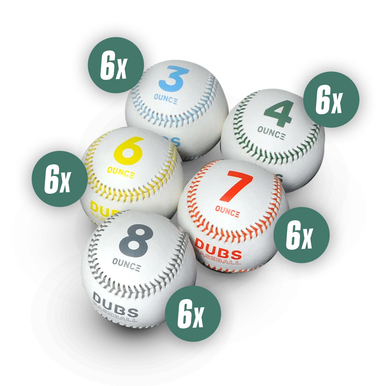
Plyo balls are designed for explosive throwing drills and arm care work, often with reinforced seams for realistic grip. Weighted baseballs are full-grain leather balls used for catching, throwing, and hitting practice, providing realistic game feel. Plyo balls typically range from 3.5 oz to 35 oz, while weighted baseballs cover 3-11 oz. Choose plyo balls for isolated arm strengthening and weighted baseballs for integrated sport-specific drills.
How do I know if weighted equipment is worth the investment for my team?
Weighted equipment delivers measurable returns when integrated into structured training. Track metrics like sprint time, change-of-direction performance, bat speed, and throwing velocity before and after introducing equipment. Professional-grade weighted gear from established suppliers like Dubs Baseball is built for durability across high-volume team use, reducing replacement costs over time. Start with core tools (plyo balls and weighted baseballs) and evaluate performance gains over 4-8 weeks.
How should I incorporate weighted equipment into daily training routines?
Weighted equipment works best as part of structured periodization. Use lighter loads during high-intensity sport practice to avoid fatigue, and heavier loads during dedicated strength phases. Plyo balls fit well in warm-ups and arm care routines (10-15 minutes), while weighted baseballs support hitting stations and positional throwing drills. Allow adequate recovery between sessions and rotate equipment weights to prevent adaptation plateaus and manage training load.
What role does resistance training play in long-term player development?
Resistance training builds the foundation for sustained athletic performance and injury resilience. Weighted equipment develops power, strength, and movement quality that support sport specialization at higher levels. Progressive overload through varied loads and drills prevents plateaus and keeps athletes engaged. Long-term development requires balancing resistance work with sport practice, mobility, and recovery to optimize athlete readiness and minimize overuse injury risk.