

Best Practice Baseballs for Kids: Buyer's Review
Posted by Editorial Team on 2026 Nov 12th
Quick Summary
The best practice baseballs for kids match the drill, age, and space. Foam balls are safest for close-range and machine hitting, while standard 9-inch, 5-ounce practice balls suit intermediate players doing tee work, front toss, and bullpen sessions.
- Beginners aged roughly 5 to 8 should start with lighter foam training balls for lower-impact hitting.
- Dubs Baseball DMB-300 foam balls are built to be 3 ounces, with high-density foam.
- Intermediate players aged roughly 9 to 12 usually fit a standard 5-ounce practice ball.
- Keep at least 10 feet between the batter and other players during tee work.
- Use foam or soft balls for close-range hitting and any drill within a few feet of the thrower.
Table of Contents
- What Practice Baseballs Are Built For
- Practice Baseballs for Kids: How to Choose by Age and Skill Level
- Comparing Dubs Practice Baseball Options Side by Side
- Batting Practice Baseballs That Don't Go Far
- Safety Considerations for Children Using Practice Balls
- Batting Practice Baseballs for Kids: Setting Up Hitting Drills
- How Many Practice Baseballs to Buy, Including Bulk Options for Kids
- Choosing Your Practice Baseballs for Kids Next Step
- Frequently Asked Questions
What Practice Baseballs Are Built For
Practice baseballs are designed for repeated use in cages, bullpens, and training areas, where durability and cost per ball matter more than match-level feel. Most are built to the same 9-inch, 5-ounce dimensions as game balls, but with construction choices that favor longevity. Dubs Baseball's practice line uses cowhide leather, raised seams, a rubber-covered cork center, and 15% grey wool winding. To compare durability, seam design, and price for your skill level, see compare practice baseballs by durability, seams, and price.
That construction is a trade-off. Raised seams grip better for pitchers working on command, and the thicker leather holds up to repeated contact with bats and fences. The cost is a slightly different feel off the bat compared with a flat-seam game ball. For most youth programs, that difference is acceptable.
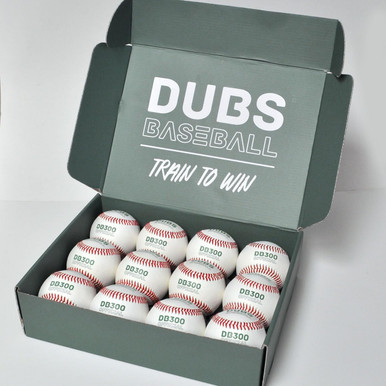
Practice balls suit three main jobs: tee work, front toss, and bucket drills in indoor facilities; live pitching in bullpens; and defensive reps where players field grounders and catch fly balls repeatedly. The DB300 - Dozen Practice Baseballs is built for exactly these uses and is a common choice for indoor training.
Practice Baseballs for Kids: How to Choose by Age and Skill Level
Age and skill level should drive the choice more than brand name. A 7-year-old swinging a bat for the first time does not need the same ball as a 16-year-old taking live BP. Heavier, harder balls can cause flinching and poor mechanics in younger hitters, and they add risk when thrown at close range.
For beginners (roughly ages 5-8), look for lighter, lower-impact options such as foam training balls. Dubs Baseball's DMB-300 foam balls are made from high-density foam and built to be 3 ounces, which gives hitters good feedback while limiting sting on the hands.
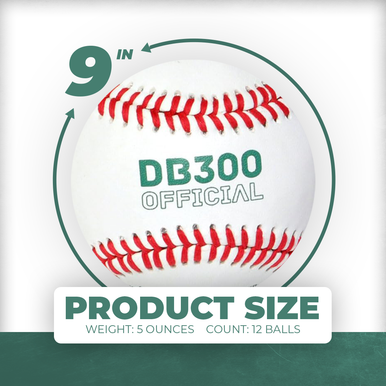
For intermediate players (roughly ages 9-12) working on bat speed and pitch recognition, a standard 5-ounce practice ball is usually the right fit. The DB300 practice ball is listed at 9 inches and 5 ounces with cowhide leather and raised seams.
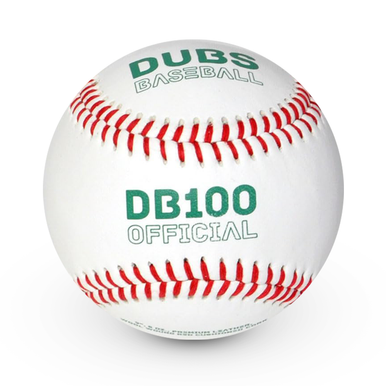
The DB100 game ball uses flat seams and 85% grey wool winding, while the DB300 practice ball uses raised seams and 15% grey wool winding.
Size and weight matter as much as material. The DB300 and DB100 are listed at 9 inches and 5 ounces.
Quantity matters as well. Dubs Baseball sells the DB300 in a dozen pack and in a bucket with three dozen practice baseballs.
Watch out: Do not assume a ball labeled "youth" is automatically safe for a 6-year-old. Check the actual weight and core material, and confirm the ball matches the drill and the child's skill level. For age-specific limits on weighted ball use, see how to use weighted baseballs safely with age-specific progressions.
Comparing Dubs Practice Baseball Options Side by Side
Dubs Baseball's practice and game balls differ in seam style and wool winding. The practice line uses raised seams and 15% grey wool. The game line uses flat seams and 85% grey wool.
| Product | Seams | Wool Winding | Best Use |
|---|---|---|---|
| DB300 - Dozen Practice Baseballs | Raised | 15% | Practice buckets, tee work, pitching |
| DB100 - Dozen Game Baseballs | Flat | 85% | Games and game-like practice |
| DMB-300 - Dozen Foam Balls | Foam | N/A | Machine hitting and catcher blocking |
For current pricing, check the product pages directly or request a quote from Dubs Baseball.
Batting Practice Baseballs That Don't Go Far
Hitting practice is where ball choice matters most for safety and cost. Standard leather balls carry well when struck squarely, which is a problem in backyards, small gyms, and open fields. Foam balls remove most of that risk. The DMB-300 is built for machine hitting and cage work.
The trade-off is feel. Foam does not replicate the contact of a leather ball, so use it for reps focused on timing and swing mechanics, then switch to leather for live-feel work.
Safety Considerations for Children Using Practice Balls
Safety starts with the type of ball, not only the drill. Hard leather balls at close range can cause injury, particularly to the face and hands. Use foam or soft balls for close-range hitting and any drill where a child is within a few feet of the thrower.
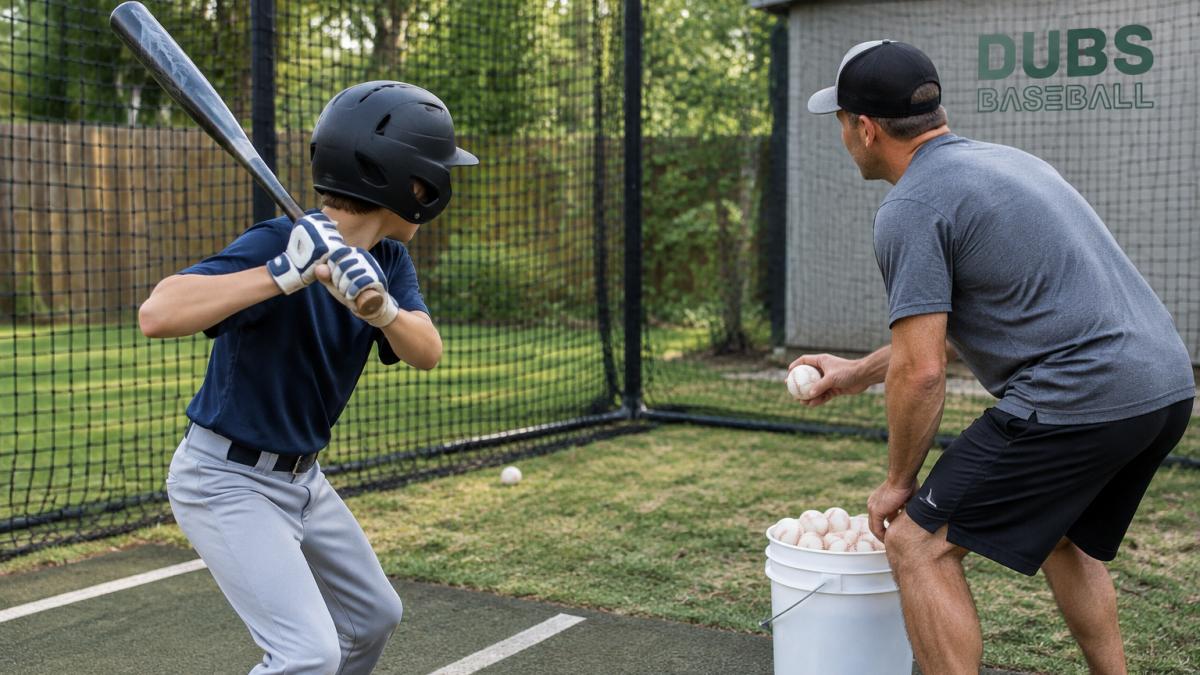
Supervision is non-negotiable. An adult should be present for all practice sessions involving batted or thrown balls, even foam ones. Set clear boundaries: define a swing zone, a retrieval zone, and a waiting zone so players are not crossing into the path of a swing or a throw. A common pattern is to use cones or chalk lines to mark these areas, especially in backyards and parks.
Safe spacing matters as much as the ball. For tee work, keep at least 10 feet between the batter and any other player. For front toss, the tosser should be at least 15 to 20 feet away and slightly off to the side, not directly in front of the batter. For machine hitting, use a net or cage and keep all players behind the batter. Never let a child retrieve a ball while another child is swinging.
Protective equipment should match the drill. Batting helmets are standard for any live hitting or pitching drill, even with foam balls. For fielding practice, a fielder's mask or mouthguard is a reasonable precaution for younger players still developing hand-eye coordination. Catchers should wear full catcher's gear for any drill involving pitched balls, including foam.
Watch for fatigue as well. Young players who swing through repeated sets often lose focus, and that is when hands get stung and bats get bounced. Set rest intervals and supervise cage work. Rotate players every 10 to 15 swings to keep reps consistent and avoid fatigue.
A common mistake is treating all practice balls as interchangeable. They are not. Match the ball to the drill, the child's age, and the space. A foam ball in a small gym is safer than a leather ball, but a leather practice ball on an open field with proper spacing is appropriate for older players. When in doubt, err on the side of softer and lighter, and always prioritize supervision and clear boundaries over the ball itself.
Batting Practice Baseballs for Kids: Setting Up Hitting Drills
For machine hitting, the DMB-300 foam ball is designed for pitching machines and cage work.
Set up stations so each player has a clear swing zone. Rotate players every 10 to 15 swings to keep reps consistent and avoid fatigue.
How Many Practice Baseballs to Buy, Including Bulk Options for Kids
Quantity depends on how many players use the balls and how often. A single player training three times a week can get by with one dozen. A team running daily drills will need more, and the DB300-36 - Bucket with 3 Dozen Practice Baseballs includes a bucket for organizing stations.
For larger programs, compare bulk options before ordering. Teams and leagues can review the full range of bulk purchasing options, including pricing and quantities, on the bulk baseball options page.
Choosing Your Practice Baseballs for Kids Next Step
Start with the drill, then the age, then the space. Foam balls cover close-range and machine work safely. Leather practice balls handle tee work, front toss, and bullpen sessions. Game balls suit live hitting and games.
Review the Dubs Baseball product pages before buying, or request a quote for the pack size you need. Pricing depends on quantity, delivery, and current promotions.
Frequently Asked Questions
What are the best baseballs for practice?
The best practice baseball depends on the child's age, skill level, and where they train. Dubs Baseball sells several practice options, including the DB300 dozen practice baseballs, which use cowhide leather, raised seams, a rubber-covered cork center, and wool winding. Practice balls are listed for indoor facilities using pitching machines, tee work, front toss, and turf carts and buckets for defensive and pitching work. Compare the listed materials and weight against your child's needs, and check the Dubs Baseball website for current pricing and availability.
What is the difference between practice baseballs and regular baseballs?
Practice baseballs are built for repeated use in drills, buckets, and cages, while game baseballs are used in competition. Dubs Baseball's DB300 practice ball is listed at 9 inches and 5 ounces with cowhide leather, raised seams, and 15 percent grey wool winding. The DB100 game ball uses flat seams and 85 percent grey wool winding, and it is made for games as well as practice buckets.
Which practice baseballs are safest for young kids?
For younger children, softer foam options reduce the risk of injury during batting and catching drills. The Dubs Baseball DMB-300 dozen foam balls are made from high-density foam for pitching machines and are built to be 3 ounces, which gives hitters good feedback while limiting sting on the hands. The DMB-300 foam balls are also listed for catcher blocking drills, including footwork and body positions. Always supervise younger players and match the ball to the drill and the child's comfort level.
How many practice baseballs should a child have?
The right number depends on how often the child practices and how many players share the equipment. A family at home with one child may need only a dozen for regular tee work and fielding. A youth team or academy typically needs a larger supply, and the DB300-36 bucket with three dozen practice baseballs is one listed option. Pricing depends on quantity, delivery, and current promotions, so check the Dubs Baseball website for an accurate quote before ordering.
