

Choose the Right Baseballs for Batting Practice
Posted by Editorial Team on 2026 Oct 25th
Last Updated: October 25, 2026
Quick Summary
The best baseballs for batting practice are engineered to withstand repeated impacts from cages and tee work while providing realistic hitting feedback, with options including raised-seam balls for skill development, flat-seam balls for game preparation, and soft training balls for younger players. Quality practice baseballs typically last 50-200+ hits depending on construction, making bulk purchases economically sensible for serious programs.
- Practice baseballs use reinforced stitching, thicker leather covers, and sometimes synthetic materials to survive high-volume use better than game balls.
- Raised-seam practice balls provide better grip and feedback for developing mechanics, while flat-seam balls replicate official game conditions more closely.
- Soft training baseballs weigh 2-2.5 ounces compared to regulation 5 ounces, making them ideal for younger players and indoor facilities with safety priorities.
- Buying in bulk with options like the DB300-36 or DB300-120 reduces per-unit costs and ensures consistent inventory for ongoing practice.
- Weighted baseballs (6-8 ounces) build bat speed and strength when used 1-2 times weekly as supplemental training, not primary practice.
Table of Contents
- What Makes Baseballs for Batting Practice Different
- Practice Baseballs vs Game Baseballs: Key Differences
- Raised Seams and Flat Seams: How Seam Design Affects Training
- Soft Training Baseballs for Safer, Controlled Practice
- Baseballs in Bulk for Practice: Cost and Durability
- Weighted Baseballs for Training: Building Bat Speed and Strength
- Selecting Baseballs by Player Age and Skill Level
- Building Your Batting Practice Baseball Kit
- Frequently Asked Questions
What Makes Baseballs for Batting Practice Different
Baseballs for batting practice differ fundamentally from game baseballs in construction, durability expectations, and performance characteristics. Learn more about what practice baseballs are designed for and their specific uses. Practice balls prioritize withstanding repeated impacts from batting cages, tee work, and front toss scenarios rather than meeting official game specifications.
A practice ball that feels nothing like a game ball teaches bad habits. One that tears after a dozen swings wastes money and disrupts your training schedule.
The construction differences matter more than most players realize. Practice baseballs typically use reinforced stitching, thicker leather covers, and sometimes synthetic materials to extend their lifespan. The core and winding may vary from regulation specs because the ball's job is different. It needs to survive your swing, not perform under official game conditions.
| Feature | Practice Baseball | Game Baseball |
|---|---|---|
| Primary Purpose | Withstand repeated hits | Meet official specs for competition |
| Cover Material | Often synthetic or reinforced leather | Official cowhide leather |
| Seam Type | Raised or flat depending on training focus | Flat seams (official spec) |
| Expected Lifespan | 50-200+ hits depending on quality | Single game or limited use |
| Cost per Ball | Lower when bought in bulk | Higher, single-dozen pricing |
| Ideal Use | Cages, tee work, front toss, pitching machines | Games, official practice |
What separates a quality practice ball from a cheap one is how long it actually lasts under real conditions. A ball that splits after 30 swings isn't saving money. It's costing you training time and forcing constant replacements.
Practice Baseballs vs Game Baseballs: Key Differences
Practice baseballs and game baseballs serve different purposes, which explains why they're built differently. Game baseballs must meet official specifications set by leagues and governing bodies.
The most obvious difference is seam height. Game baseballs use flat seams, which affects how the ball moves through the air and how pitchers can grip it.
The wool winding composition also differs. Official game baseballs contain a specific percentage of wool winding (typically 85% for regulation balls). Practice baseballs may use different winding ratios or synthetic alternatives to improve durability.
Leather cover quality varies too. Game baseballs use premium cowhide that meets strict standards. Practice baseballs often use reinforced cowhide or synthetic leather that resists tearing and moisture damage better than official leather.
The official rules of Major League Baseball specify exact dimensions, weight, and construction standards for game balls. Practice balls have no such requirement, which is why you'll find so much variety in the market. Your job is matching the practice ball to your specific training goal.
Raised Seams and Flat Seams: How Seam Design Affects Training
Seam height changes how a ball feels in your hands, how it moves, and how durable it is. Raised seams sit noticeably higher on the ball's cover, while flat seams are stitched flush with the leather surface.
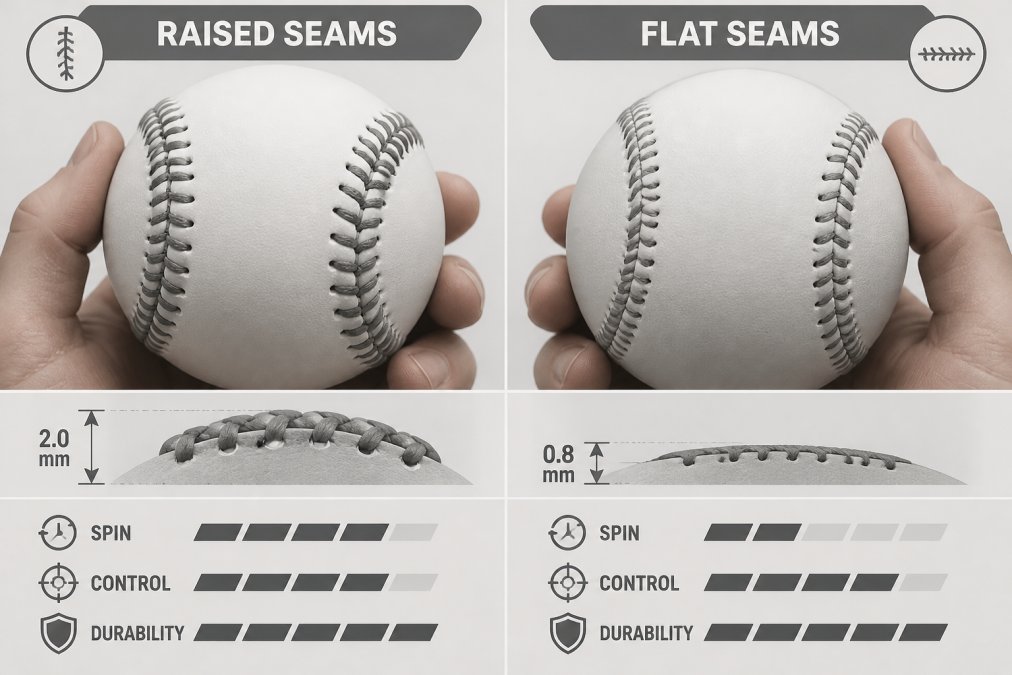
Raised seams provide better grip and tactile feedback. Pitchers often prefer them because they can feel the seams clearly when gripping the ball. Hitters benefit too, raised seams make it easier to track ball rotation and understand pitch movement.
Flat seams replicate official game conditions more closely. If your goal is preparing for competition, flat-seam practice balls train your eyes and hands to work with what you'll actually face in games.
Durability differs between the two. Raised seams tend to hold up longer under repeated impacts because the stitching sits higher and experiences less direct contact with the bat.
Your choice depends on your training phase. Early-stage players developing fundamentals often benefit from raised seams because the feedback is clearer. Advanced players preparing for competition should use flat-seam balls to match game conditions.
Soft Training Baseballs for Safer, Controlled Practice
Soft training baseballs weigh less than regulation balls and have softer covers, making them ideal for younger players, indoor facilities with space constraints, and drills where safety is the priority.
Soft training balls typically weigh 2-2.5 ounces compared to the regulation 5 ounces. This lighter weight means less force on joints when fielding and allows younger players to generate better bat speed with proper mechanics. The softer cover absorbs impact differently, reducing the shock that can lead to arm injuries during high-volume throwing practice.
Indoor facilities often require soft training balls because they reduce ricochet velocity and wall impact. A regulation ball hitting a wall in a cage bounces back hard and fast. A soft training ball absorbs more energy, making the environment safer for players standing nearby and reducing equipment damage.
Youth baseball programs benefit significantly from soft training balls. Players aged 8-12 are still developing coordination and strength. Using balls that match their physical capabilities keeps practice productive instead of frustrating.
The trade-off is that soft training balls don't feel identical to game balls. They're not meant to. They're training tools for specific phases of development. As players mature and their bodies strengthen, they transition to regulation-weight practice balls and eventually game balls. This progression builds strength safely while maintaining focus on mechanics.
Baseballs in Bulk for Practice: Cost and Durability
Buying baseballs in bulk changes the math on practice equipment investment. A single dozen practice baseballs costs more per unit than buying in larger quantities.
Bulk purchasing also addresses a practical reality: practice baseballs get lost, damaged, or worn out. A team running daily cage work, fielding drills, and pitching practice can go through baseballs quickly.
The economics of sports equipment purchasing shows that teams investing in proper inventory management reduce per-unit costs significantly. Buying in bulk isn't just about price, it's about maintaining training consistency.
The Dubs Baseball DB300-36 - Bucket with 3 Dozen Practice Baseballs provides a middle-ground option for teams or serious players who want bulk pricing without committing to massive case quantities.
DB300 - Dozen Practice Baseballs →

Durability becomes more important when buying in bulk. A cheap ball that lasts 50 swings costs more over a season than a quality ball lasting 200+ swings. Calculate total cost per usable ball, not just initial purchase price.
Weighted Baseballs for Training: Building Bat Speed and Strength
Weighted baseballs build bat speed, develop proper swing mechanics, and increase rotational strength without requiring complicated equipment.
The training principle is straightforward: overload the movement pattern slightly, then return to normal weight. Your body adapts by becoming stronger and more explosive.
Weighted balls also teach proper sequencing. If your swing mechanics are flawed, a heavier ball makes the problem obvious. You can't muscle a weighted ball with poor technique, you have to use your whole body correctly.
Sports science research on weighted training implements demonstrates that progressive overload with weighted tools improves power output when used correctly. The key is proper progression: start with moderate weight increases, use them for limited reps, then return to normal weight work.
Weighted balls work best as supplemental training, not your primary practice method. Use them 1-2 times per week for targeted strength work, then return to normal-weight practice for skill development.
Selecting Baseballs by Player Age and Skill Level
The right baseball for your situation depends on age, skill level, and specific training goals. Youth players need different equipment than high school competitors, and recreational practice differs from competitive training.
Young players aged 5-10 benefit from soft training baseballs or lighter practice balls. Their bodies are still developing, and equipment that matches their strength level keeps practice productive. A regulation 5-ounce ball can feel too heavy, leading to poor mechanics and frustration. Lighter balls let them focus on swing fundamentals and build confidence.
Players aged 11-14 transition toward regulation-weight practice baseballs. They're stronger, their mechanics are more developed, and they need equipment that prepares them for competitive play.
High school and college players should use practice baseballs that closely match game specifications. Flat-seam practice baseballs replicate competition conditions, ensuring training directly prepares them for actual games. Weighted balls become valuable supplemental training at this level for power development.
Recreational players focusing on fitness and casual play can use any quality practice baseball. The DB300 - Dozen Practice Baseballs serves this purpose well, quality construction at reasonable cost for regular practice.
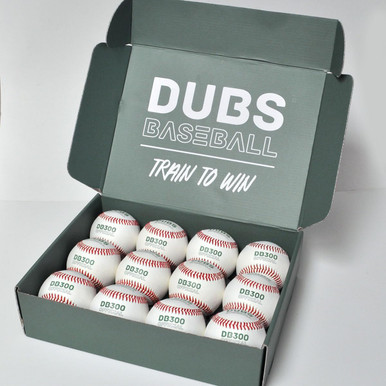
Competitive academies and training facilities should stock multiple ball types: soft training balls for younger age groups, raised-seam practice balls for skill development, flat-seam practice balls for game preparation, and weighted balls for strength training.
Building Your Batting Practice Baseball Kit
A complete batting practice setup includes multiple ball types for different training purposes.
Start with a core inventory of quality practice baseballs. The DB300 - Dozen Practice Baseballs provides a solid foundation with raised seams and durable construction suitable for high-school and college-level teams.
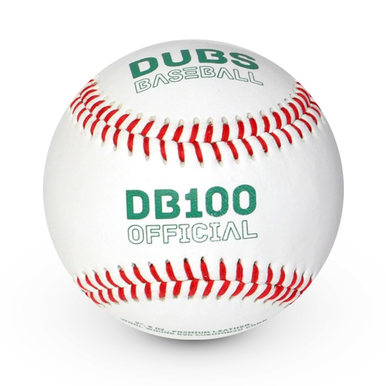
Add flat-seam game baseballs to your kit for competition preparation. The DB100 - Dozen Game Baseballs lets you train with official specifications so your mechanics and timing adjust to what you'll face in actual games.
Include lighter pre-game hitting balls for warm-up and specific drills. These balls reduce distance for confined spaces and allow higher-volume repetition without fatigue.
Consider weighted balls as supplemental training tools once your core inventory is established. These build strength and power but should complement regular practice, not replace it.
Storage and organization matter more than most people realize. Buckets keep balls contained, easy to transport, and protected from weather. Dubs Baseball's bucket options simplify inventory management for teams and facilities.
The investment in a complete practice baseball kit pays dividends through improved training consistency, reduced equipment replacement costs, and better preparation for competition.
Frequently Asked Questions
What are the best baseballs for batting practice?
The best baseballs for batting practice depend on your use case. Practice baseballs with raised seams work well for high-school and college team drills and are durable for repeated hits in cages and off tees. Pre-game hitting balls with reduced weight (2.25 oz) are ideal for warm-up drills before games because they fly shorter distances and allow more reps in limited space. Game baseballs with flat seams suit teams that want balls matching official specifications for both practice and games.
Are practice baseballs different from game baseballs?
Yes. Practice baseballs typically feature raised seams and are designed to withstand repeated hits in training environments like cages and pitching machines. Game baseballs have flat seams and meet official specifications for competitive play. Practice baseballs with raised seams are more durable for high-volume training, while game baseballs prioritize flight consistency and feel for match conditions. Some teams use game baseballs for practice to familiarize players with official ball feel.
How do soft training baseballs compare to standard practice balls?
Soft training baseballs, often made with polyurethane covers and weighing around 2.25 oz, fly straight without curving like plastic balls and allow players to take more swings quickly. Standard practice baseballs (5 oz with cowhide leather and raised seams) are heavier and more durable for high-volume team practice. Soft balls are better for pre-game warm-ups; standard practice balls suit rigorous team training.
Should I buy baseballs in bulk for my team or academy?
Bulk purchasing is cost-effective for teams and training facilities that run multiple drills daily. Buying by the case (10 dozen or more) reduces per-ball cost compared to single dozens. Bulk orders work best when you have consistent storage, a rotation system to manage wear, and clear protocols for replacing damaged balls. Smaller teams or individual players may prefer starting with a single dozen or a bucket of three dozen to test durability and feel before committing to larger quantities.
Building a batting practice program requires matching equipment to your specific needs. The baseballs you choose affect how well your training translates to game performance. Dubs Baseball provides professional-grade practice and game baseballs designed for serious players and coaches committed to skill development. Explore our full selection of practice baseballs, game balls, and training equipment to build the kit that supports your competitive goals.
