

Baseball Training Equipment Guide for Hitting and Pitching
Posted by Editorial Team on 2026 Nov 10th
Quick Summary
Hitting and pitching training equipment works best when each piece has a clear role in the practice plan: warm-up, skill work, or conditioning. Dubs Baseball organizes its catalog around these roles, including weighted plyo balls for pitchers and weighted hitting balls and foam balls for hitters.
- Group equipment by role: warm-up tools, skill tools, and conditioning tools.
- Dubs Plyo Balls range from 3.5 oz to 35 oz so coaches can match weight to the athlete.
- Keep one weight per block with consistent throw counts, and drop to a lighter ball if form breaks down.
- The DHP-12PAC hitting plyo pack includes four 250g, four 300g and four 350g balls.
- Start with the lightest, most controlled work and finish with lower-intensity conditioning.
Table of Contents
- How Hitting and Pitching Training Equipment Fits Into a Practice Plan
- Weighted Plyo Balls for Pitching Velocity: How to Use Them Safely
- Hitting Training Aids: Weighted Bats, Foam Balls and Screens
- Best Baseball Training Aids for Youth Players
- Baseball Coaching Equipment Checklist for Teams and Facilities
- Building an Integrated Hitting and Pitching Program
- Your Next Step: Outfitting Your Practice Space
- Frequently Asked Questions
Baseball Training Equipment Guide for Hitting and Pitching
Last Updated: November 10, 2026
How Hitting and Pitching Training Equipment Fits Into a Practice Plan
Hitting and pitching training equipment works best when it has a clear job in the practice plan, and Dubs Baseball builds its catalog around that idea. Most coaches don't struggle to find gear. They struggle to decide which pieces earn a spot in a 90-minute session. The answer depends on what each piece is supposed to change: swing path, bat speed, release mechanics, or arm readiness.
A practical way to start is to group equipment by its role. Warm-up tools prepare arms and hitters before live work. Skill tools isolate one movement at a time. Conditioning tools build strength and speed over weeks, not minutes. Mixing these roles in one drill block usually dilutes all three.
The equipment that follows in this guide fits into those roles. Weighted plyo balls belong in the warm-up and conditioning slots for pitchers, while foam balls and weighted bats serve skill work for hitters. A coach who plans sessions this way can rotate equipment across the week without overloading any one movement pattern.
Weighted Plyo Balls for Pitching Velocity: How to Use Them Safely
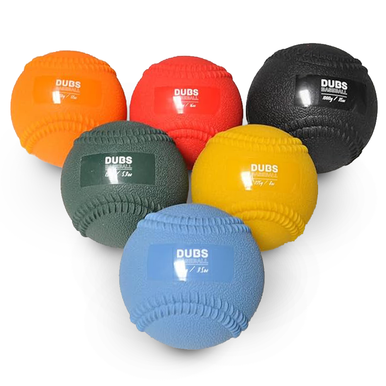
Weighted plyo balls are a common tool for pitchers who want to work on arm speed and throwing mechanics, but they require discipline. Dubs Plyo Balls use seams molded into the body, so the grip and hand feel stay close to a regular baseball during drills. Complete plyo ball training guide covers weight selection and a full throwing routine. The set runs from 3.5 oz to 35 oz, which lets coaches match the ball to the athlete instead of guessing. Pitchers plyo ball set with carry bag is built for this progression.
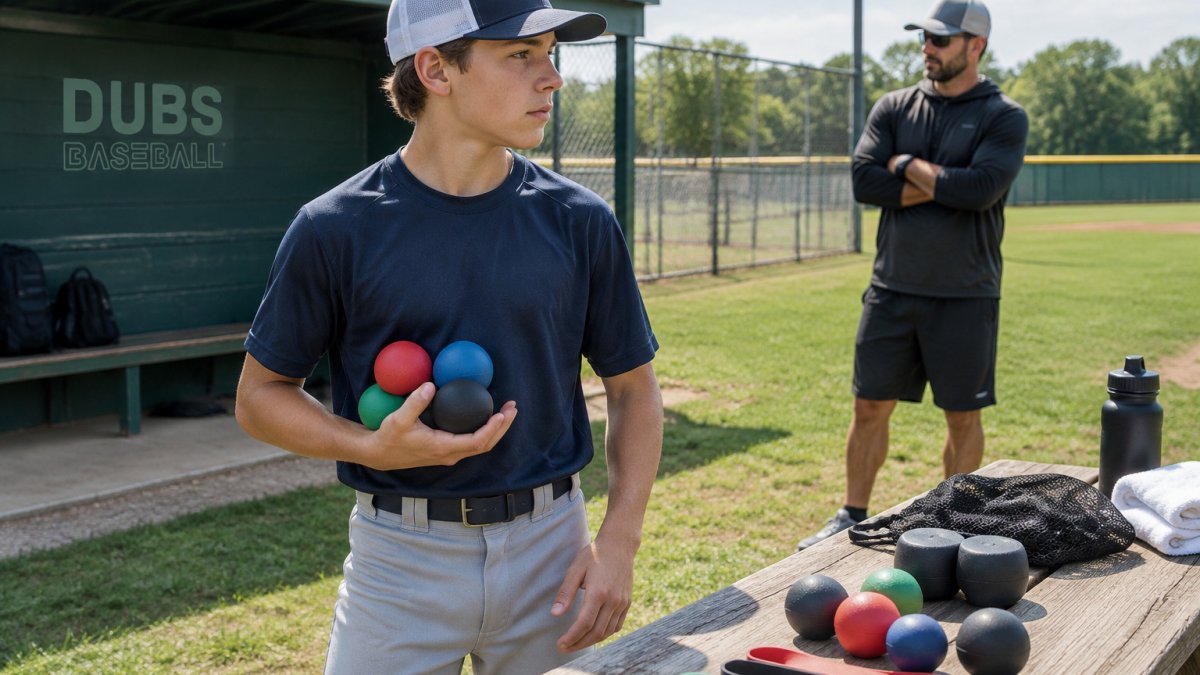
Watch out: throwing heavy balls at maximum effort with no progression is the fastest way to turn a training tool into an arm injury. Keep sessions controlled and stop when mechanics break down.
Choosing Weight Progressions by Age and Experience
Weight selection should follow the athlete's age, maturity and current throwing volume, not the heaviest ball on the rack. Coaches should match the starting weight to the athlete's experience and supervise the progression. The DPB-6PAC pitchers set includes a carry bag, which makes it practical for coaches moving between fields.
Keep the progression simple: one weight per block, consistent throw counts, and a clear rule that the athlete drops back to a lighter ball if form changes. Coaches who track these details in a training log can spot fatigue before it shows up in the arm.
Workload, Arm Care and Recovery Guidelines
Workload is the variable most coaches underestimate. Every throw adds to the arm's total load, so plyo sessions should be counted alongside bullpens and games. Weighted baseball guide walks through age-specific progressions, stop rules and workout frequency. A common mistake is adding weighted work on top of a full pitching schedule without reducing anything else.
Rest days matter as much as the training itself. Baseball arm bands buyer's guide explains how to choose bands for recovery and arm conditioning.
The article's key details for weighted plyo ball use are summarised below.
| Item | Value | Note |
|---|---|---|
| Dubs Plyo Ball weight range | 3.5 oz to 35 oz | Match the ball to the athlete |
| DPB-6PAC pitchers set | Includes carry bag | Practical for moving between fields |
| Progression rule | One weight per block | Consistent throw counts |
| Form breakdown | Drop to lighter ball | Stop when mechanics break down |
Hitting Training Aids: Weighted Bats, Foam Balls and Screens
Hitting aids fall into two groups: tools that build bat speed and tools that protect repetition volume. The DHP-12PAC hitting plyo pack includes four 250g, four 300g and four 350g balls, which gives hitters a range of weights for tee work and front toss. Shop the hitting plyo pack to see the full weight range. Used alongside normal bats, these balls are used to develop bat speed and strength.
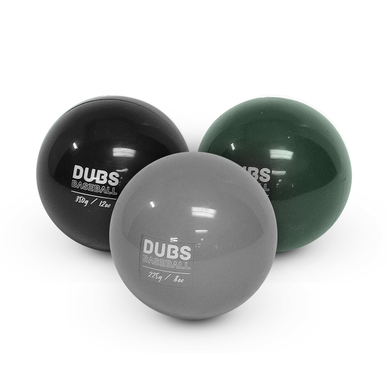
Foam training balls serve a different purpose. The DMB-300 dozen foam balls are built for pitching machines and cage work, and they are made to be 3oz with a high-density foam construction. They are also used in catching drills where players practice blocking footwork. The DLS-100 is the Dubs L Screen.
Many facilities combine these items: foam balls for cage work, and weighted balls for pre-game drills.
Best Baseball Training Aids for Youth Players
Youth players need equipment that matches their size, coordination, and attention span, and the right choices change by age band. A common pattern among youth coaches is to sort training aids into three age windows: 6-9, 10-12, and 13-14. Each window has different priorities for ball weight, bat size, and session length.
For players 6-9, the priority is fun and fundamental movement. Foam balls and light plastic training balls let kids swing and throw without fear of sting, and they work well for tee work, short-toss, and simple catching drills. A light plyo ball in the 3.5-5 oz range can be introduced only after a proper warm-up and only for short tosses, not maximum-effort throws. Coaches should keep sessions to 20-30 minutes of active work and count throws in the same way they count swings.
For players 10-12, coordination and swing consistency become the focus. Weighted hitting balls in the 250g-300g range are appropriate for tee and front-toss work, and a light plyo set can support pitching mechanics at submaximal effort. The DB300-36 bucket of practice baseballs is designed for high school and college teams and can also serve as game balls at youth levels. Coaches should still cap high-effort throwing and avoid stacking weighted-ball work on top of a full game schedule.
For players 13-14, the training aids can start to mirror adult equipment, but volume should still be managed. Heavier plyo balls and weighted bats belong in supervised sessions with a clear progression rule: one weight per block, consistent throw or swing counts, and a drop back to a lighter tool if form changes. Parents often ask which items are worth buying first. For most families, a starter set of foam balls and a light plyo set covers the most useful work at home, and larger equipment can wait until the player's training routine becomes consistent.
Watch out: youth players often want to use the heaviest ball or bat on the rack because it feels like progress. Coaches and parents should set a simple rule that the athlete earns a heavier tool by showing consistent mechanics at the current weight, not by age or eagerness alone.
Baseball Coaching Equipment Checklist for Teams and Facilities
Coaches buying for a full roster should plan equipment by station rather than by item count, and retail buyers should plan by season and replacement cycle. A simple checklist helps:
- Practice baseballs for live fielding and batting practice (DB300-36 bucket for team-scale volume)
- Weighted plyo balls for pitcher warm-up stations (DPB-6PAC set)
- Weighted hitting balls for pre-game hitting stations (DHP-12PAC pack)
- Foam machine balls for cage work and catcher blocking drills (DMB-300)
- A screen for controlled hitting and pitching targets (DLS-100)
- [ ]
For a coaching-supply retailer, the checklist is only the starting point. The bigger question is how to stock and merchandise a complete hitting and pitching assortment so coaches can buy for a station, not just a single item. A practical approach is to organize the shelf and the online catalog by training role: warm-up and arm care, skill work, conditioning, and protection. Within each role, offer a good-better-best price tier so a youth program, a high school team, and a facility can each find a fit without leaving the category.
For current pricing, quantities and delivery options, check Dubs Baseball's website or request a quote, since costs depend on order size and timing.
Building an Integrated Hitting and Pitching Program
Hitting and pitching work share a foundation in rotational power and timing, which makes an integrated program more efficient than two separate plans. A weekly template might place weighted plyo work for pitchers and weighted hitting drills on the same day, followed by foam-ball cage sessions for hitters. Coaches can use the same warm-up area and rotate stations, which saves setup time and keeps players moving.
The key is sequencing. Start with the lightest, most controlled work, move to skill reps, and finish with lower-intensity conditioning. Keep a log of throw counts, swing counts and session notes so you can adjust weight progressions based on what the athletes actually handled.
Your Next Step: Outfitting Your Practice Space
Outfitting a practice space is easier when you start with the stations you run most often and buy for those first. If your program trains pitchers daily, the plyo set and recovery accessories come first. If hitting cage time is your bottleneck, foam balls and the hitting plyo pack should lead the order.
Dubs Baseball carries the training equipment covered in this guide, including the DB300-36 practice bucket, DPB-6PAC pitchers plyo set, DHP-12PAC hitting plyo pack, DMB-300 foam balls and DLS-100 screen. Visit the product pages to review specifications and request current pricing before you build your order.
Frequently Asked Questions
What are the essential training aids for baseball hitting development?
The core hitting aids are a tee, a pitching machine or front-toss setup, a set of foam training balls, and weighted or plyo bats used for tee work and front toss. Foam balls such as the Dubs DMB-300 dozen pack are made to be 3oz with high-density foam for use in pitching machines and cages. Weighted hitting plyo balls, such as the DHP-12PAC pack with 250g, 300g and 350g balls, are used for pre-game drills and bat speed work at indoor or outdoor stations. Start with the basics and add weighted tools as players master mechanics.
How do weighted plyo balls improve pitching velocity?
Weighted plyo balls are used by pitchers to develop arm strength and throwing movement patterns through a range of weights. Plyo balls in different weights, such as those in the Dubs DPB-6PAC set (3.5oz to 35oz), let pitchers train with varied loads while keeping a realistic grip and feel. Velocity gains depend on a structured program, consistent arm care and adequate recovery, not on the balls alone. Coaches should progress weights gradually and limit volume for younger throwers.
What equipment is necessary for a professional baseball coaching facility?
A coaching facility needs practice baseballs for buckets and turf work, foam balls for cage hitting, a L-screen, and hitting and pitching plyo sets. Practice buckets should use balls built for repeated use, such as the DB300-36 bucket with three dozen practice baseballs. Quantity needs depend on the number of players, session length and how often equipment is replaced. For current pricing and bulk quotes, check the Dubs Baseball website.
How can coaches choose the right baseball training gear for youth players?
Match the gear to age, size and skill level. Lighter foam balls and lighter plyo weights suit younger players, while heavier options are reserved for older, experienced throwers. Check each product's listed weight and intended use before buying. For team purchases, plan around the number of players who will share each item, and keep a log of how the gear is used so you can adjust the training plan and reorder what gets the most use.
