

How to Practice Baseball by Yourself: Solo Drills That Work
Posted by Editorial Team on 2026 Oct 20th
Table of Contents
- What You Need for Solo Baseball Practice at Home
- Solo Baseball Hitting Drills You Can Do Alone
- Baseball Throwing Drills by Yourself: Building Arm Strength and Accuracy
- Pitching Practice by Yourself: Form, Targets, and Command
- Fielding and Catching Drills Without a Partner
- Baseball Drills to Do Alone: Building a Weekly Practice Plan
- Safety, Space, and Age Adjustments for Solo Practice
- Conclusion: How Can You Practice Baseball by Yourself?
- Frequently Asked Questions
Last Updated: October 20, 2026
What You Need for Solo Baseball Practice at Home
You can practice baseball by yourself with a bat, a few balls, a batting tee, and a net. The right setup depends on your space and which skills you want to sharpen.

Solo baseball practice is training you do alone with tees, nets, and rebounders to build repeatable mechanics. Reps matter more than partners.
Here's the gear that covers most drills:
- A batting tee for swing work and contact points
- A hitting net to catch balls indoors or in a small yard
- A bucket of practice baseballs so you're not chasing every ball
A tee, a net, and a bucket get you 80% of the way there.
Solo Baseball Hitting Drills You Can Do Alone
Hitting is the easiest skill to train solo. A tee removes the timing variable so you can focus on swing path, hand position, and follow-through. Most players rush tee work as a warm-up; it's where mechanics actually get fixed.
Try these solo baseball hitting drills:
- Tee work, middle pitch: 20 swings, focusing on a level bat path and contact out front
- Tee work, inside and outside: move the tee to train contact points on both sides of the plate
- One-hand swings: top hand only, then bottom hand only, to expose weak spots
A common mistake is swinging full speed at every rep. Slow down. Feel the hand position at contact. Speed comes later.
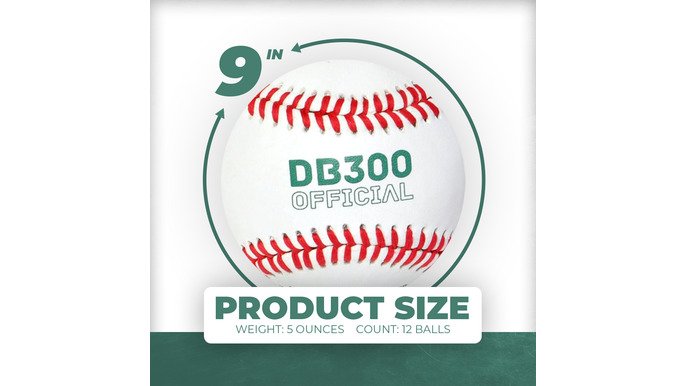
For balls that hold up to repeated cage work, the DB300-36 practice baseball bucket gives you three dozen balls built for tee work and front toss. The foam option, DMB-300 foam balls, saves your hands and bats during long cage sessions.

Baseball Throwing Drills by Yourself: Building Arm Strength and Accuracy
You can build arm strength alone, but be smart: throwing hard into a net without a warm-up is how arms get hurt. The baseball throwing drills by yourself that work start with a proper warm-up and build gradually.
Start with a sock ball or foam ball indoors. Toss it into a net or against a padded wall. Focus on:
- Proper throwing mechanics: elbow up, hand on top of the ball, follow through across your body
- Short toss: 10-15 feet, working on a clean release
- Arm bands: light resistance work to warm up the shoulder before throwing
Keep reps controlled. Accuracy comes from repeatable mechanics, not max effort every throw.
Pitching Practice by Yourself: Form, Targets, and Command
Pitching solo is about form and targets. You can't simulate a batter, but you can train your delivery and command with a net and target, or a tarp with a marked strike zone.
Work through these in order:
- Bullpen reps into a net: focus on repeatable pitching form, not velocity
- Target practice: aim at a small target inside the zone to build precision
- Balance drills: pause at the top of your leg lift to check your control
Command comes from repetition. Throw 20-30 controlled pitches, rest, repeat, and track where the ball lands. Missing the same way every time is a mechanic issue, not luck.
Fielding and Catching Drills Without a Partner
Fielding alone is tougher, but a pitch returner or rebounder solves it. Throw a ball at it and it comes back like a ground ball or line drive, giving you real reps at game speed.
Fielding ground balls solo:
- Rebounder reps: work on getting in front of the ball and using soft hands
- Wall ball: throw a ball against a wall and field the bounce
- Glove work: short toss against a wall to train hand-eye coordination
Catching drills:
DB300-36 - Bucket with 3 Dozen Practice Baseballs →
- Sock ball toss: toss a sock ball up and catch it to build hand-eye coordination
- Blocking reps: use foam balls for catcher blocking drills without fear of injury
The DMB-300 foam balls are built for exactly this. They're safe for blocking work and give good feedback off the glove.
Baseball Drills to Do Alone: Building a Weekly Practice Plan
Random drills build random skills; a weekly plan builds real progress. Most solo-practice advice lists drills without showing how to sequence them, how long each block runs, or how to measure improvement. This plan fixes that.
The three-block session structure
Every solo session follows the same skeleton, whether you have 20 minutes or 45:
- Warm-up (5-8 minutes): arm bands, light toss, and dry swings. Never skip this block.
- Skill block (15-25 minutes): one primary skill, one drill, high focus.
- Cool-down and log (3-5 minutes): light toss, stretch, and record your numbers.
The skill block is where progress happens. Keep it to one skill per session.
Position-specific weekly plans
Use the plan matching your primary role. If you play multiple positions, rotate plans week to week rather than stacking them in one day.
Hitter's week (4 sessions, 20-25 minutes each):
| Session | Focus | Time | Key Drill | Measurable Goal |
|---|---|---|---|---|
| 1 | Swing path | 20 min | Tee work, middle pitch | 20 swings, 15 with level bat path |
| 2 | Contact points | 20 min | Tee work, inside and outside | 10 swings each side, 8 solid contacts |
| 3 | Hand strength | 20 min | One-hand swings, top then bottom | 10 reps each hand, no dropped bat |
| 4 | Timing and rhythm | 25 min | Dry swings and tee work combined | 30 total reps, 20 with balanced finish |
Pitcher's week (4 sessions, 20-30 minutes each):
| Session | Focus | Time | Key Drill | Measurable Goal |
|---|---|---|---|---|
| 1 | Mechanics | 20 min | Bullpen reps into net | 25 pitches, 20 with repeatable release point |
| 2 | Command | 25 min | Target practice, small target | 30 pitches, 18 in target zone |
| 3 | Balance | 20 min | Pause at leg lift, dry reps | 15 dry reps, no drift |
| 4 | Light bullpen | 20 min | Controlled pitches, 70% effort | 20 pitches, 15 strikes |
Fielder's week (4 sessions, 20-25 minutes each):
| Session | Focus | Time | Key Drill | Measurable Goal |
|---|---|---|---|---|
| 1 | Ground balls | 20 min | Rebounder reps, forehand and backhand | 25 reps, 20 clean fields |
| 2 | Hand-eye | 20 min | Wall ball, short toss | 30 catches, 25 clean |
| 3 | Footwork | 20 min | Rebounder, lateral movement | 20 reps each direction |
| 4 | Mixed | 25 min | Rebounder and wall ball combined | 40 total reps, 32 clean |
Progression rules
Don't add volume until the current volume is clean. Hit your measurable goal in three consecutive sessions, then add 5 reps or 5 minutes to that block. Miss it twice in a row, drop back one step. This keeps you from grinding bad reps.
Adjusting volume by age and skill level
- Ages 5-8: two sessions per week, 15 minutes each, foam balls only, no measurable goals beyond fun and participation.
- Ages 9-12: three sessions per week, 20 minutes each, introduce the measurable goals but keep them loose.
- Ages 13-18: four sessions per week, 20-30 minutes each, full progression rules and logging.
Safety, Space, and Age Adjustments for Solo Practice
Safety comes first, especially indoors. Here are the specific distances, surfaces, and setup checks to run before every session.
Space requirements by drill type
| Drill Type | Minimum Distance | Minimum Clearance | Surface |
|---|---|---|---|
| Indoor tee work into net | 10 ft from tee to net | 8 ft ceiling | Carpet, mat, or turf |
| Indoor throwing with foam or sock ball | 10-15 ft to net or padded wall | 8 ft ceiling | Carpet or mat |
| Outdoor tee work into net | 10-12 ft from tee to net | Open sky | Grass or turf |
| Outdoor long toss | 60-90 ft, built gradually | Open sky | Grass |
| Rebounder ground balls | 15-20 ft from rebounder | Open sky or 10 ft ceiling | Grass, turf, or gym floor |
| Wall ball fielding | 10-15 ft from wall | Open sky | Grass or padded wall |
Measure the tee-to-net distance once and mark it with tape or chalk. Most indoor hitting injuries come from setting up too close and catching a bat follow-through or ricochet.
Net placement and containment
- Anchor the net. Sandbags or stakes at the base keep the net from tipping when a ball hits high.
- Leave a buffer. Place the net at least 2 ft from any wall so the net can absorb the ball rather than transfer force to the wall.
- Check the catch pocket. A net with a loose or sagging pocket lets balls roll back out at your feet.
Surface and damage prevention
- Indoors: use foam or sock balls for any throwing drill. Reserve real baseballs for tee work into a net with a backstop.
- Garage or basement: cover windows, water heaters, and stored items with a moving blanket or hang a secondary tarp behind the net.
- Outdoors: clear the area of windows, cars, grills, and people before you start. Walk the fielding area once and pick up debris.
Age and skill adjustments
- Ages 5-8: foam balls only, 15-minute sessions, an adult within sight, and no overhead throwing indoors.
- Ages 9-12: introduce real baseballs for tee work only, keep throwing to foam or sock balls indoors, and cap outdoor long toss at 60 ft.
- Ages 13-18: full drills allowed, but build long toss distance gradually and keep a rest day between hard throwing days.
Arm care checklist
- Warm up with arm bands and light toss for 5-8 minutes before any hard throwing.
- Cap hard throws at 30-40 per session, then rest the arm.
- Cool down with light toss and stretch after every throwing session.
- Take at least one full rest day per week from throwing.
Conclusion: How Can You Practice Baseball by Yourself?
The honest challenge with solo practice is staying consistent when no one is watching. It's easy to skip a session without a coach or teammate keeping you accountable. The right setup helps.
At Dubs Baseball, we build gear that makes solo reps easier to stick with: a bucket of practice baseballs means fewer interruptions, foam balls let you train indoors without fear, and durable equipment holds up session after session.
Get started with Dubs Baseball and turn your solo practice into real skill development.
Frequently Asked Questions
What baseball drills can I do by myself?
You can practice hitting off a batting tee, dry swings, soft toss into a net, throwing into a rebound net or pitch returner, pitching accuracy drills at a target, fielding ground balls off a wall or turf, and hand-eye coordination work with a sock ball. These solo baseball drills target every part of the game without needing a partner. Start with a warm-up, then rotate through hitting, throwing, and fielding blocks for 30-60 minutes.
How can I practice hitting baseball alone?
Set up a batting tee and hit into a net, or use a pitch returner to get feedback on contact. Focus on one technique cue per session, like keeping your hands inside the ball or finishing your swing. Use foam or practice baseballs to protect your bat and hands during high-repetition work. Record a few swings on your phone to check your stance and follow-through. Even 15 minutes of focused solo baseball hitting drills builds real muscle memory.
What equipment do I need for solo baseball practice?
At minimum, you need a bat, a bucket of practice baseballs, a batting tee, and a hitting net. A pitch returner or rebounder adds throwing and fielding value. Foam balls are useful for high-volume hitting and catching drills. For throwing work, a target or net helps track accuracy. Dubs Baseball offers practice baseballs, foam balls, and a sock net that cover most solo drills. You can start with limited equipment and add gear as your practice grows.
How long should I practice baseball each day?
Most youth and high school players benefit from 30-60 minutes of focused solo practice per day, 3-5 days per week. Split the time into warm-up, one or two skill blocks, and a cool-down. Quality repetitions matter more than total time, so keep sessions structured and stop when form breaks down. Younger players (ages 5-10) should keep sessions closer to 20-30 minutes with more frequent breaks.