

How to Choose Baseballs for Team Practice
Posted by Editorial Team on 2026 Nov 15th
Table of Contents
- What Makes a Practice Ball Different From a Game Ball
- Choosing Practice Baseballs for Youth Teams
- Selecting the Best Baseballs for Batting Practice
- Matching Balls to Pitching, Throwing and Fielding Drills
- How Many Baseballs Your Team Needs for Practice
- Durability, Cost Per Use and When to Retire a Ball
- Ordering Your Team's Practice Baseballs From Dubs Baseball
- Frequently Asked Questions
What Makes a Practice Ball Different From a Game Ball
A practice baseball and a game baseball look nearly identical, but they are built for different jobs, and knowing how to choose baseballs for team practice starts with understanding that difference. Game balls are made to the exact standards required for official play, with tight stitching and consistent weight. Practice balls trade some of that precision for durability and value, since they take far more punishment in a session of repeated hitting, fielding, and throwing.
Most leagues and tournaments require official game balls. Practice balls are a sensible choice for everything else. Many teams keep a mix of both: game balls for scrimmages and live games, and practice balls for bucket work, tee drills, and pitching machines.
When you learn how to choose baseballs for team practice, Dubs Baseball offers both categories, including the DB300 practice line and the DB100 official game ball. Coaches can match each ball to its purpose rather than wearing out expensive game balls in batting cages.
Choosing Practice Baseballs for Youth Teams
Youth teams have the widest range of needs, so the right ball depends heavily on the age of the players. A ball that suits a 16-year-old can be too heavy, too hard, or too large for a 9-year-old. The practical approach is to band your roster by division and buy to the band, not to a single "youth" spec.
Matching Ball Size and Weight to Player Age
Official youth balls are typically smaller and lighter than adult balls, and the size and weight requirements change by age division. Coaches should confirm the exact size and weight with their league before buying, since requirements vary by age division and by sanctioning body. Matching the ball to the player helps kids develop proper mechanics instead of compensating for an unfamiliar ball.
A workable banding pattern that most youth programs follow:
- Youngest divisions (roughly 8U and below): Softer, lower-impact balls that reduce sting on the hands and face. These are commonly labeled as reduced-impact or safety balls and are the right default for coach-pitch and early machine work.
- Middle divisions (roughly 9U-12U): Standard youth practice balls at the league's specified size and weight. This is where most teams buy in bulk, because volume and durability matter more than precision.
- Older divisions (13U and up): Standard practice balls that match the adult or intermediate spec your league uses, with an emphasis on seam consistency for pitching development.
Watch out: buying a single "youth" ball for a program that spans 8U to 14U usually means the youngest players are handling balls that are too hard and the oldest are working with balls that are too soft to simulate game feel.
Seam Type and Cover Material for Younger Players
Raised seams give pitchers a better grip, which helps them learn spin and control. Flat or low-profile seams are common on game balls and can be easier for beginners to handle. Leather covers offer a classic feel and are durable under regular use, while synthetic covers are often more affordable and easier to clean.
For younger players, the cover material matters less than the ball's hardness and consistency. A softer synthetic cover on a reduced-impact core is a better starting point than a hard leather ball, because it lets kids build confidence without flinching. Move them to standard practice balls as their strength and confidence grow, and keep a small set of league-approved game balls separate for scrimmages.
League Compliance and Safety Checks
Before you buy in bulk, confirm three things with your league: the required ball size and weight for each division, whether reduced-impact balls are mandated or merely permitted at the youngest levels, and whether your league or sanctioning body requires a specific certification mark on game balls. Requirements vary by age group and competition, so a ball that is fine for a weekend scrimmage may not be legal for a sanctioned tournament.
A common pattern is to keep two inventories: a bulk practice supply sized to your league's practice spec, and a smaller, league-approved game-ball supply reserved for scrimmages and competition. That split keeps you compliant on game day without burning through certified game balls in the cage.
Selecting the Best Baseballs for Batting Practice
Batting practice places the highest demand on a ball. Each swing and contact compresses the cover and tests the seams, so durability matters more here than almost anywhere else.
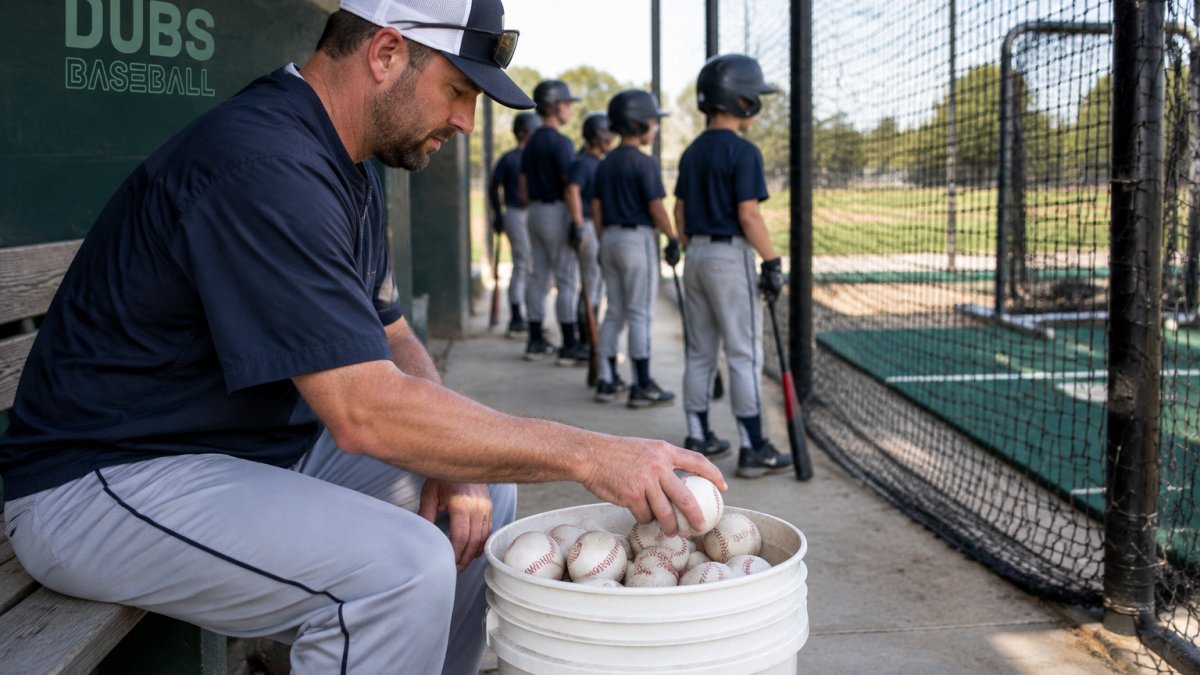
Look for a cowhide leather cover, a cork center, and firmly stitched raised seams. The DB300 line uses a cowhide cover, a rubber-covered cork center, and grey wool winding, and is listed for indoor facilities using pitching machines, tee work, front toss, and BP in the cages.
A common mistake is buying cheap balls for batting practice and then replacing them constantly. A ball that lasts through the season often costs less per session than a cheaper ball that needs frequent replacement.
Matching Balls to Pitching, Throwing and Fielding Drills
Different drills stress balls in different ways, so one type rarely fits every station.
- Pitching and bullpen work: Use practice balls with a consistent seam so pitchers can build grip and feel.
- Throwing and long toss: Standard practice balls handle repeated throws well.
- Fielding and ground balls: Balls with a firm cover hold their shape when they take hard hops and repeated fielding.
Reserve game balls for drills that closely simulate real play. Using them for every station will shorten their life quickly.
How Many Baseballs Your Team Needs for Practice
Quantity depends on roster size, number of stations, practice frequency, and how often balls are lost or retired. Most coaches underbuy, run short by midseason, and then pay a premium for a rushed reorder. A simple team-level estimate avoids that.
A Team Buying Calculator You Can Run in Five Minutes
Use this four-step estimate. It is a planning tool, not a precise forecast, but it gets you in the right range.
- Count simultaneous stations. A typical practice runs three to five stations at once (tee work, front toss, infield, outfield, bullpen).
- Assign balls per station per session. A common pattern is 12-18 balls per hitting station, 8-12 per throwing or bullpen station, and 6-10 per fielding station, depending on how many reps you want before a ball is chased down.
- Multiply and add a loss reserve. Multiply stations by balls per station, then add 20-30% for balls lost over fences, fouled into weeds, or retired midseason.
- Multiply by your season length in weeks, then divide by expected ball life. If a practice ball survives roughly 8-12 heavy sessions before it should be retired, divide your total session demand by that life to get the number of balls you actually need to own.
A worked example: four stations averaging 12 balls each is 48 balls per session. Add a 25% reserve and you are at 60 balls per session. Over a 12-week season that is 720 ball-sessions; at 10 sessions of life per ball, you need about 72 balls on hand, plus a small buffer. That lands most teams in the three-dozen to six-dozen range for a single squad, and larger programs scale up from there.
Sizing Your Order to the Bucket or Case
Once you have a number, match it to how balls are sold. The DB300-36 bucket with three dozen practice baseballs covers many small programs and single squads. The DB300-120 case of ten dozen suits larger teams, academies, and programs running multiple squads or frequent sessions. The DB100-36 bucket of game balls is useful for game-day use and scrimmages and should be sized separately from your practice supply so game balls stay in good condition.
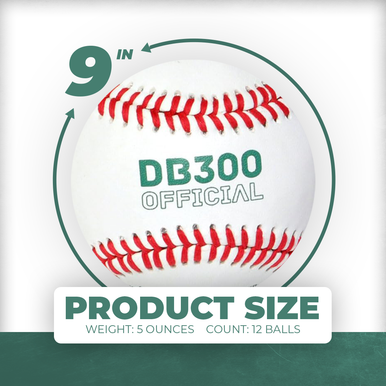
Watch out: sizing your practice order to your game-ball count is a common mistake. Game balls are used far less often, so a one-to-one ratio leaves you short on practice balls and overstocked on game balls.
Budgeting the Order
Pricing depends on quantity, delivery timing, and current promotions, so compare total cost across bucket and case sizes before ordering. Set your budget from the number of balls you need times the per-ball price at that quantity, then hold back a small reserve for midseason replacements. Pricing depends on quantity, delivery timing, and current promotions, so check the Dubs Baseball website for current prices or request a quote before placing a bulk order. Buying in the right quantity from the start keeps practice running smoothly and avoids midseason shortages.
Durability, Cost Per Use and When to Retire a Ball
A practice ball's true cost is what it costs per session, not its sticker price. Divide the purchase price by the number of sessions a ball survives. A ball that lasts twice as long often delivers better value even at a higher price.
Retire a ball when the cover splits or lifts, when seams loosen or fray, when the ball loses its shape, or when it no longer feels consistent off the bat or glove. Mismatched worn balls can affect how players react and can cause frustration.
Store balls in a dry bucket or bag, rotate them so wear spreads evenly, and keep game balls separate from practice balls so they stay in good condition for competition.
The table below summarises when to retire a practice ball and how to store them.
| Sign | Action |
|---|---|
| Cover splits or lifts | Retire the ball |
| Seams loosen or fray | Retire the ball |
| Ball loses its shape | Retire the ball |
| Feel no longer consistent | Retire the ball |
| Dry bucket or bag storage | Keep balls in good condition |
| Rotate balls | Spread wear evenly |
| Keep game balls separate | Preserve them for competition |
Ordering Your Team's Practice Baseballs From Dubs Baseball
Start by listing your age group, number of stations, and typical session length. Then choose the product line that fits: DB300 practice baseballs for batting, pitching machines, and general practice, and DB100 game balls for scrimmages and games.
When you are ready, visit the Dubs Baseball product pages to compare buckets and cases, or contact the team for a current quote on bulk orders. Buying in the right quantity from the start keeps practice running smoothly and avoids mid-season shortages.
Last Updated: November 15, 2026
Frequently Asked Questions
What is the difference between practice baseballs and regular baseballs?
Practice baseballs are built for repeated use in drills, buckets and cages, so they are often made with raised seams and durable covers that hold up to frequent contact. Game baseballs are designed for official play, with flat seams and specific size and weight standards. Dubs Baseball's DB300 practice ball, for example, uses cowhide leather, raised seams and a rubber-covered cork center, while its DB100 game ball uses flat seams and more wool winding. Check current pricing and availability on the Dubs Baseball website, since prices vary by quantity and delivery.
How do you choose baseballs for youth team practice?
Start with the age group your team plays in, since youth leagues often specify ball size and weight. Then consider the drills you run most. Pitching machines, tee work and front toss put more wear on a ball, so a durable cowhide practice ball suits those settings. Check your league's rules before buying, because some organizations require specific balls for games even if practice balls are used in drills.
How many baseballs does a team need for practice?
The number depends on roster size, practice length and how many stations run at once. Plan for enough balls that each station has a full bucket and that players are not waiting for balls to be collected. Many coaches keep a reserve for rotating out worn balls. Dubs Baseball sells practice balls in dozens and in cases of 10 dozen, which helps teams match quantity to their roster. Pricing depends on quantity, dates and delivery, so request a current quote from Dubs Baseball.
Which baseballs are best for high school batting practice?
For high school batting practice, look for a durable cowhide practice ball with raised seams, since those hold up to repeated hitting and machine or tee work. Pair the ball with a bucket that keeps stock organized between rounds. Dubs Baseball's DB300 practice ball is listed for high school and college practice buckets and for pitching machines, tee work and batting practice in the cage, so it fits that use case.
