

Best Practice Baseballs for High School Teams Compared
Posted by Editorial Team on 2026 Nov 8th
Last Updated: November 8, 2026
Quick Summary
The best practice baseballs for high school teams depend on construction, cover material, and how many balls the season requires. Raised-seam balls suit pitching and catching, flat-seam balls suit machine and fielding work, and a mix of practice and game balls usually works best.
- Raised seams give pitchers a firmer grip and more movement, matching game-ball feel.
- Flat seams sit level with the cover and stay consistent in repeated throwing drills.
- Leather cover quality matters most, since the cover is the part that wears first.
- Compare pack sizes by cost per ball, not sticker price, to plan your season supply.
- Keep official game balls separate from practice rotations so they last for games.
Table of Contents
- Practice Baseballs for High School: What to Look For
- Practice Balls vs. Game Balls: Which Does Your Team Need?
- Best Practice Baseballs for High School Drills and Setups
- Batting Practice Baseballs for High School: Matching Balls to Drills
- High School Baseballs in Bulk: Pack Sizes, Cost per Ball, and Season Budget
- Caring for Practice Balls and Keeping Your Rotation Going
- Choosing Your Practice Ball Order for the Season
- Frequently Asked Questions
Practice Baseballs for High School: What to Look For
Choosing practice baseballs for high school teams comes down to three things: construction, cover material, and how many balls you need to cover the season. A bucket of cheap balls that splits after a month can cost more than a better-made ball that lasts. This guide walks through the options, compares them side by side, and shows how to plan a season's supply.
Practice balls are built for repetition. They get hit off tees, thrown in front toss, fired from pitching machines, and rolled across infield drills. The construction and materials determine how well they hold up under that use and how closely they feel like a game ball.
Raised-Seam vs. Flat-Seam Construction
The most visible difference between practice balls is the seam. A raised seam stands up off the cover, which gives pitchers a firmer grip and produces more movement on breaking pitches. A flat seam sits level with the cover, which makes the ball easier to handle for younger or smaller hands and tends to be more consistent when it is thrown repeatedly in drills.
For most high school programs, raised seams are the better fit for pitching and catching work, since they match the feel of a game ball. Flat seams are a practical choice for fielding and throwing drills where grip consistency matters more than spin.
Leather Cover and Cork Center Basics
Practice balls are typically wrapped in cowhide leather over a cork or rubber core, with a layer of wool winding underneath. The cover is the part that wears first, so leather quality matters more than most buyers expect. The center determines weight and bounce, and the winding determines how firm and round the ball feels. Dense winding gives a livelier ball, while looser winding softens the feel and can be useful for younger players.
Practice Balls vs. Game Balls: Which Does Your Team Need?
Practice balls and game balls share a basic design, but they are not interchangeable in every setting. Game balls are built to official specifications and are usually reserved for live play, where consistency and feel affect performance directly. Practice balls are built to take more abuse at a lower cost per ball.
For most high school teams, the right answer is a mix. Use practice balls for batting practice, tee work, and bucket drills, and keep official game balls for scrimmages and games. The DB100 Dozen Game Baseballs carry flat seams and 85% grey wool winding. The DB300 Dozen Practice Baseballs use raised seams and 15% grey wool winding.
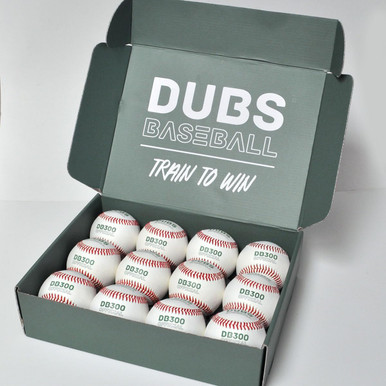
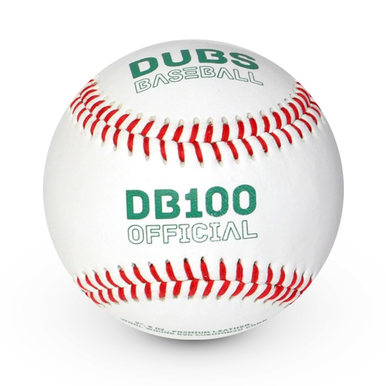
Watch out: Mixing game balls into heavy practice rotations wears them out faster, so reserve them for the situations where game feel matters.
Best Practice Baseballs for High School Drills and Setups
Practice balls involve trade-offs, and the right pick depends on which drill stresses the ball hardest. Matching seam profile, cover material, and winding density to the equipment and the rep type is one way to choose.
Pitching machines reward roundness and cover integrity above all. A machine pinches the ball between wheels at speed, so a cover that scuffs or a winding that goes soft shows up quickly as inconsistent exit velocity and erratic location. Raised seams can feed unevenly through some machine configurations, so many coaches keep a flat-seam or well-worn-in set dedicated to machine work and reserve raised-seam balls for hand-thrown drills. Check your machine manufacturer's guidance on seam profile before committing a full bucket.
Tee work and front toss stress the cover through repeated contact with the bat and the ground. A sturdy leather cover over a dense cork core holds shape longer here, which keeps the ball coming off the bat predictably from the first round to the last. Softer, looser-wound balls are fine for younger or lighter-swinging players but compress and go out of round faster under high school swing speeds.
Fielding drills, short hops, double-play feeds, and outfield reads, reward a ball that fields cleanly and survives turf and dirt contact. Flat seams sit level with the cover and are easier to pick up and transfer for infielders working on quick hands, while raised seams give catchers and pitchers a more game-like grip. Indoor cage and turf-cart work adds a different stress: repeated contact with netting and synthetic surfaces scuffs covers, so designate a cage set and inspect it more often than your outdoor buckets.
A practical setup is three tiers: a machine set chosen for roundness and cover durability, a hand-thrown set with raised seams for pitching and catching work, and a fielding set that can absorb turf wear. The DB300 Dozen Practice Baseballs, with raised seams and 15% grey wool winding, can suit hand-thrown and fielding work; the DB100 Dozen Game Baseballs, with flat seams and 85% grey wool winding, are an option for machine work and scrimmage-adjacent reps. Match each tier to the most demanding drill it will see, not the easiest one.
Watch out: running raised-seam balls through a pitching machine without checking the manufacturer's guidance can cause inconsistent feeds and premature cover wear, confirm the recommended seam profile before you load a bucket.
Batting Practice Baseballs for High School: Matching Balls to Drills
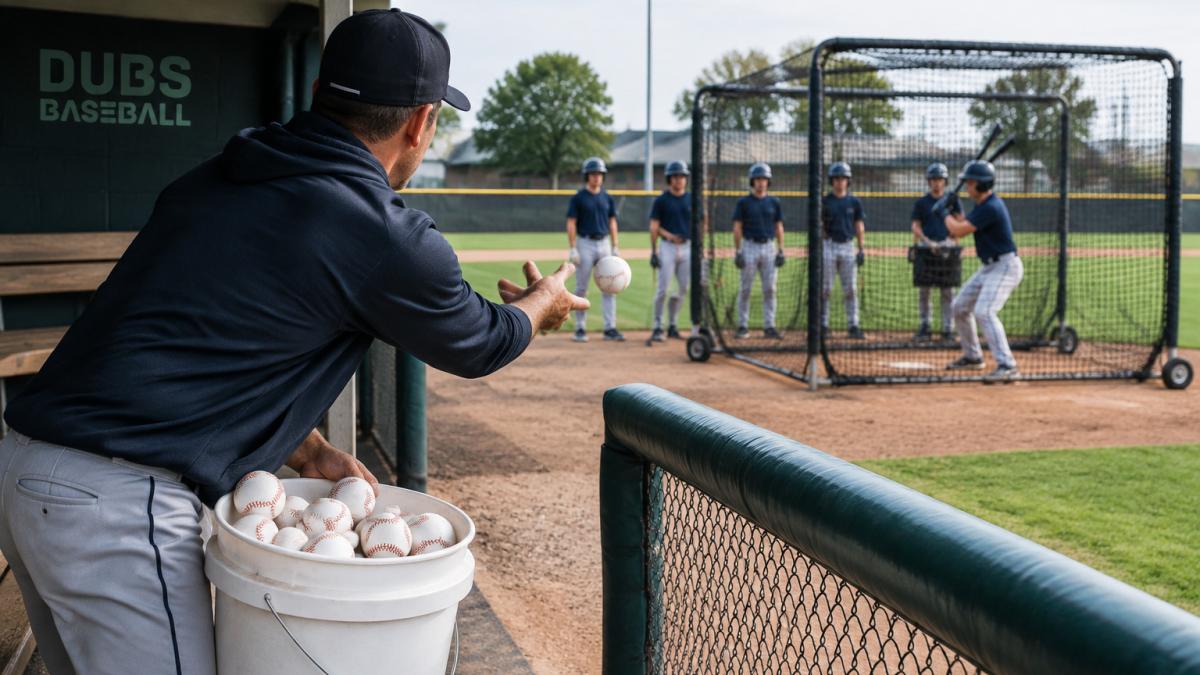
Batting practice puts repeated direct contact on the ball, which can scuff or split covers over time. A practice ball with a leather cover and a cork core is built to handle that contact.
High School Baseballs in Bulk: Pack Sizes, Cost per Ball, and Season Budget
Bulk buying only saves money when the pack size matches how your program actually consumes balls. The useful number is not the case price, it is cost per ball, adjusted for how many balls you will retire before the season ends. Most programs find that the cheapest per-ball option is only the best deal if the balls survive long enough to be used.
Start by normalizing every option to a single figure. Divide the total order price by the number of balls in the pack. The DB300 comes in a 12-pack, a 36-pack bucket (three dozen), and a 120-pack case (ten dozen). The DB100 game ball comes in a 12-pack and a 120-pack case. Pricing depends on quantity, delivery, and your order, so check the current price on the product page or request a quote before comparing.
Next, estimate seasonal consumption instead of guessing. Count active drill stations and the number of balls each station keeps in rotation at once. A typical station, tee, front toss, short-hop infield work, or a pitching machine, runs through a bucket while the previous bucket is being collected. Multiply stations by balls per station to get your working set, then add a retirement buffer. Balls get lost over fences, split at seams, and go soft from repeated machine use, so planning a buffer beyond your working set is sensible. Compare that total to the pack sizes available: if your working set plus buffer lands near 36, a 36-pack bucket covers daily use, while a 120-pack case makes more sense for a full program running multiple stations and a freshman or JV schedule alongside varsity.
Separate game balls from the practice budget. Game balls are built to official specifications, so mixing them into heavy practice rotations raises your effective cost per practice rep. Keep a dedicated set of game balls for scrimmages and games, and budget practice balls as a consumable line item that scales with stations and weeks of practice.
Watch out: compare packs by cost per ball rather than sticker price, since pack size changes the total.
The table below compares the pack sizes mentioned in this section so you can work out cost per ball before ordering.
| Pack | Balls | Use it for |
|---|---|---|
| DB300 12-pack | 12 | Small working set |
| DB300 bucket | 36 | Daily station use |
| DB300 case | 120 | Full program, multiple stations |
| DB100 12-pack | 12 | Game-ball supplement |
| DB100 case | 120 | Game-ball volume |
Balls
Caring for Practice Balls and Keeping Your Rotation Going
Practice balls last longer when they are rotated and stored properly. Keep balls out of direct sun and moisture, since heat and damp can crack leather and loosen the winding. Rotate sets between drill stations so no single bucket takes all the wear. Retire balls with split covers or soft spots promptly, because a damaged ball changes how the rest of the drill plays.
A common mistake is letting practice balls sit in a damp equipment bag between sessions. A short drying period before storage makes a visible difference over a full season.
Choosing Your Practice Ball Order for the Season
Start with your roster size and the number of drill stations you run each day. Multiply those figures to estimate how many balls are in active use at once, then add the balls you expect to lose or retire over the season. Keep a set of official game balls separate so practice wear does not reduce game-day quality.
When your plan is ready, compare the DB300 Dozen Practice Baseballs against your ball count, or review the DB300-120 case of ten dozen if you run a full program. To compare pack sizes and pick the right one, see How to Choose the Right Pack. Matching the mix to your daily drills and game schedule is a reasonable approach.
Frequently Asked Questions
What is the difference between practice baseballs and regular baseballs?
Practice baseballs are built for repeated use in buckets, cages, and pitching machines, so they are often sold in dozen packs and priced for volume. Game balls follow official specifications more closely and are used for scored play. The DB300 practice ball is 9 inches and 5 ounces with raised seams, a rubber-covered cork center, and 15% grey wool winding, and it suits High School and College practice buckets. The DB100 game ball uses flat seams and 85% grey wool winding, so it is better suited to games. Check the listing for the exact specifications before you order.
Are high school practice baseballs the same size as game balls?
Both Dubs Baseball DB300 practice balls and DB100 game balls are listed at 9 inches and 5 ounces, so the size is the same. The difference is in construction. The DB300 has raised seams and 15% grey wool winding, while the DB100 has flat seams and 85% grey wool winding. Coaches who want practice balls that feel like game balls can compare the two listings side by side before deciding which to stock.
How many practice baseballs does a high school team need?
The right count depends on how many players share each bucket, how often you run batting practice and fielding drills, and how quickly balls are lost or damaged. Dubs Baseball sells practice balls in dozen packs, a 36-ball bucket with three dozen balls, and a case of 120. Pricing depends on quantity, delivery, and your order, so check the current price on the product page or request a quote from Dubs Baseball before planning your budget.
What should coaches look for in bulk batting practice baseballs?
Start with the construction: check the seam type, the cover material, the center, and the winding percentage, and match them to how the balls will be used. Next, confirm the pack size fits your roster and drill schedule, since buying by the bucket or case lowers the cost per ball. Finally, compare the total price for the season instead of the price of a single pack, and ask Dubs Baseball about current pricing for the quantity you need.
