

Baseball Pitching Training Equipment: A 2026 Guide
Posted by Editorial Team on 2026 Oct 18th
Table of Contents
- Types of Baseball Pitching Training Equipment
- Weighted Baseballs for Pitching: Building Arm Strength
- Baseball Pitching Training Aids for Mechanics
- Pitching Targets and Accuracy Training
- Baseball Arm Care Equipment for Safety and Conditioning
- Selecting Equipment by Skill Level and Age
- Equipment Comparison and Buying Guide
- Frequently Asked Questions
Last Updated: October 18, 2026
Types of Baseball Pitching Training Equipment
Effective baseball pitching training equipment falls into distinct categories, each targeting a specific aspect of development: mechanics, arm strength, accuracy, and injury prevention.
The main categories are weighted baseballs for arm development, mechanical aids for body positioning and arm path, target systems for accuracy, and conditioning tools for arm care. Many coaches combine categories to build a well-rounded plan.
Young players benefit most from mechanics-focused equipment first, while older athletes often need weighted tools for velocity and endurance. This guide breaks down each type and helps you select tools for your situation and budget.
Weighted Baseballs for Pitching: Building Arm Strength
Weighted baseballs are the foundation of modern pitching development, building eccentric strength in the rotator cuff and posterior shoulder that translates to velocity, control, and durability.
Real Leather Weighted Balls vs. Plyo Balls
Two types dominate pitching training: real leather weighted balls and plyo balls, each suited to different training phases.
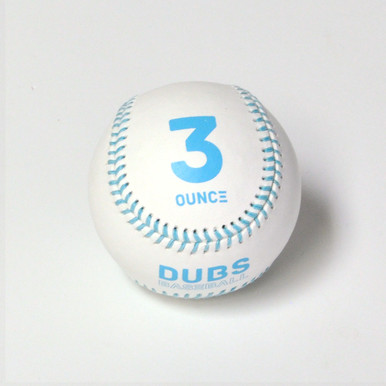
Real leather weighted balls mimic game baseballs in feel and grip, made from full grain leather like regulation balls. The DWB-PP - Real Leather Weighted Ball Set includes six weights: 3oz, 4oz, 6oz, 7oz, 9oz, and 11oz, letting you progress gradually.
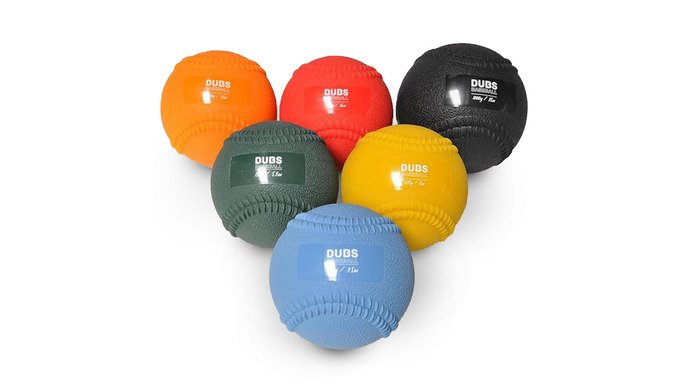
Plyo balls feature molded seams for realistic grip, engineered for explosive movements. The DPB-6PAC - Pitchers Plyo Ball Set with Carry Bag includes six weights: 3.5oz, 5.3oz, 8oz, 12oz, 16oz, and 35oz, accommodating more aggressive phases.
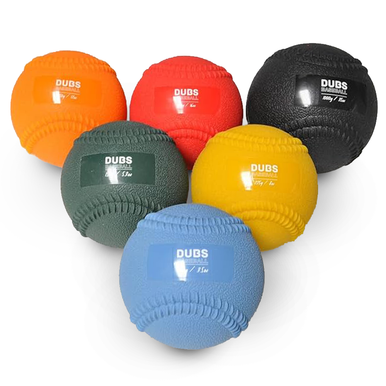
Early-phase development uses real leather balls to teach mechanics without overwhelming the arm; advanced players transition to plyo balls for power work.
Weight Progression and Training Phases
Start lighter and add weight gradually as strength improves. Moving too heavy too fast causes compensatory mechanics and injury risk.
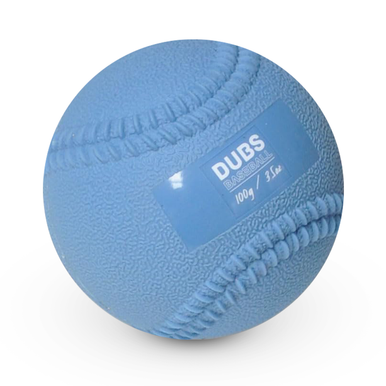
Phase 1: Foundation (weeks 1-4) Begin with the lightest ball in your set, such as the DPB-100 - 100g/3.5oz. Throwing Plyo Ball with Seams or the 3oz real leather ball.
Phase 2: Building Strength (weeks 5-8) Progress to medium weights like the DPB-150 - 150g/5.3oz Throwing Plyo Ball with Seams or 4-6oz real leather balls.
Phase 3: Power Development (weeks 9-12) Heavy weights build explosive power. The DPB-225 - 225g/8oz. Throwing Plyo Ball with Seams and DPB-350 - 350g/12oz. Throwing Plyo Ball with Seams drive adaptation.
Never skip phases. Rushing through weight stages leads to arm soreness, poor mechanics, and potential injury.
Baseball Pitching Training Aids for Mechanics
Mechanical flaws compound over thousands of throws. Training aids target improper arm path, early shoulder rotation, stride inconsistency, and balance problems during release.
Improving Arm Path and Release Point
Arm path determines pitch location, velocity, and injury risk. Many young pitchers externally rotate too early, stressing the shoulder, or drop their elbow, reducing velocity and accuracy.
Resistance bands reinforce proper arm path with light feedback.
Release point consistency separates good pitchers from great ones. Small variations in release height, distance, or timing create wild pitches or predictable patterns.
Stride and Body Positioning Tools
The stride initiates the pitching motion. A short stride reduces hip-shoulder separation and power; a long stride causes balance loss and inconsistent release point.
Stride length should measure roughly 80-85% of the pitcher's height, so a 6-foot pitcher aims for a 5-foot stride.
Body positioning affects everything downstream.
Stride plates, hip bands, and balance boards provide tactile feedback: stride plates signal drift immediately, hip bands cue rotation sequencing, and balance boards train stability during weight transfer.
Pitching Targets and Accuracy Training
Location wins games. A pitcher who throws 85 mph and hits the corners consistently is more valuable than one who throws hard but wild. Accuracy training requires specific targets and deliberate practice.
Target Practice Setup for Home and Field
Basic target systems use a net with a marked strike zone. The pitcher stands at regulation distance (60 feet 6 inches) and throws at specific zones.
Start with the middle center zone: throw 10 pitches aiming for all 10 to hit it, and progress to adjacent zones only after hitting 8 of 10.
For home training, position a smaller net 30-40 feet away to reduce space needs.
Pitch Location and Control Drills
Effective drills isolate specific skills. The "paint the corners" drill requires the pitcher to alternate between throwing to the upper corners and lower corners of the strike zone.
The "chase the zone" drill uses a catcher or target that moves to different zones.
Pitch sequencing drills train game-like decision-making. Throw a fastball to one zone, then a breaking ball to another. This builds muscle memory for pitch mixing and location changing, which translates directly to game performance.
Baseball Arm Care Equipment for Safety and Conditioning
Arm care prevents injury and extends playing careers. Many young pitchers skip arm care, viewing it as optional. This is a mistake. Proper conditioning reduces soreness, maintains range of motion, and catches minor issues before they become major injuries.
DWB-PP - Real Leather Weighted Ball Set - 3oz., 4oz., 6oz., 7oz., 9oz., 11oz. →
Warm-Up and Conditioning Protocols
Every throwing session starts with a dynamic warm-up. Band work activates the rotator cuff and posterior shoulder. Sleeper stretches improve internal rotation. Cross-body shoulder stretches address external rotation.
A proper warm-up takes 10-15 minutes. It feels like extra time, but it prevents injuries that cost months of training.
Post-throwing conditioning matters equally. Ice baths reduce inflammation after high-volume sessions. Foam rolling addresses muscle tightness. Stretching maintains mobility.
Workload Management and Injury Prevention
Pitch count limits exist for a reason. Young arms cannot handle the stress of unlimited throwing.
Rest between appearances matters as much as pitch count. A pitcher who throws 80 pitches needs at least 3 days rest before throwing again. Throwing on consecutive days or with insufficient recovery accelerates arm fatigue and injury.
Monitoring workload means tracking total throwing volume, not just game pitches. Practice throws, bullpen work, and long toss all count.
Selecting Equipment by Skill Level and Age
Equipment selection depends on age, skill level, and training phase. Buying the wrong equipment wastes money and potentially causes harm.
Youth Players and Little League
Young pitchers (ages 8-12) benefit most from mechanics-focused training. Lightweight weighted baseballs, 3-4oz, work well for this age group. Real leather weighted balls are preferable to plyo balls because they feel closer to regulation baseballs.
Mechanics training aids suit young players well. Stride plates, balance boards, and video analysis reveal mechanical issues before they become ingrained habits.
Arm care equipment should focus on mobility and activation rather than intense conditioning. Band work, stretching, and basic warm-up protocols are age-appropriate. Young pitchers don't need heavy resistance training yet.
High School and College Athletes
Older pitchers (ages 15-18+) can handle heavier weighted baseballs and more intense training protocols. The DPB-450 - 450g, 16oz. Throwing Plyo Ball with Seams and DPB-1000 - 1000g/35oz. Throwing Plyo Ball with Seams support velocity development.
College athletes often use comprehensive equipment systems. Multiple weighted ball sets, resistance bands, target systems, and conditioning tools work together. The investment is justified because performance directly impacts recruitment and playing time.
High school and college programs should implement systematic arm care protocols. Pitchers at this level throw higher volumes and face higher injury risk. Structured warm-up, conditioning, and recovery routines are non-negotiable.
Equipment Comparison and Buying Guide
Choosing equipment involves balancing effectiveness, durability, portability, and budget. Not every tool suits every situation.
Durability, Portability, and Adjustability
Real leather weighted balls are durable. Full grain leather withstands repeated use without degrading. The tradeoff: they're heavier and less portable than plyo balls.
Plyo balls are slightly lighter and easier to transport. A full set fits in a mesh bag.
Resistance bands are lightweight and portable. A full set fits in a small bag.
Adjustability matters for growing athletes. Stride plates and balance boards should accommodate different heights and leg lengths.
Budget-Friendly vs. Professional-Grade Options
Budget-conscious buyers should start with weighted baseballs and basic resistance bands. These tools deliver substantial benefits at lower cost than full equipment systems.
Professional-grade options include complete equipment packages: multiple weighted ball sets, comprehensive mechanical aids, professional pitching nets, and advanced conditioning tools.
| Equipment Type | Best For | Key Advantage | Budget Consideration |
|---|---|---|---|
| Real Leather Weighted Balls | Mechanics development | Natural feel and grip | Lower cost entry point |
| Plyo Balls | Power development | Wider weight range | Mid-range investment |
| Resistance Bands | Arm care and activation | Portable and durable | Budget-friendly |
| Pitching Nets with Targets | Accuracy training | Location-specific work | Higher cost but comprehensive |
| Stride Plates and Balance Boards | Body positioning | Immediate feedback | Moderate cost |
| Complete Equipment Systems | Facility or team use | All-in-one solution | Highest cost, best for programs |
Start small and expand as your program grows. Many successful programs began with basic weighted balls and added equipment gradually as budget allowed.
Baseball pitching training equipment transforms player development when selected and used strategically.
At Dubs Baseball, we offer specialized equipment for comprehensive training programs. Our DWB-PP - Real Leather Weighted Ball Set and plyo ball options support every phase of pitcher development.
Frequently Asked Questions
Are weighted baseballs useful for pitching practice?
Yes. Weighted baseballs for pitching develop arm strength and improve throwing mechanics when used as part of a structured program. Real leather weighted balls and plyo balls with molded seams both build strength through progressive overload. Start with lighter weights (3-5 ounces) and gradually increase. However, they should complement, not replace, regular baseball practice and proper conditioning. Overuse without adequate rest increases injury risk, so limit weighted ball sessions to 2-3 times per week with recovery days in between.
What equipment do you need to practice pitching at home?
At minimum, you need a pitching net or target, a practice mound or flat surface, and baseballs. To develop arm strength, add weighted baseballs or plyo balls in progressive weights. For mechanics work, consider resistance bands, a mirror or video setup to record delivery, and a flat surface that mimics a real mound. Ensure adequate space (at least 30 feet behind the net for safety) and check local regulations before setting up permanent equipment. Portable nets and adjustable mounds work well for space-limited setups.
What is the best equipment for pitching training?
The best equipment depends on your goals and skill level. For arm strength development, weighted baseballs and plyo balls are proven tools. For mechanics refinement, pitching nets, targets, and training aids that focus on arm path and stride are essential. For youth players just starting, a basic net and regular practice baseballs are sufficient. For competitive or college-level pitchers, a combination of weighted balls in multiple weights, a practice mound, resistance bands, and target systems provides comprehensive development. Durability and proper form matter more than quantity of equipment.
How do weighted balls improve pitching if they're heavier than a game baseball?
Weighted balls train your arm to generate force against increased resistance, building strength and neuromuscular control. Lighter weighted balls (3-5 ounces) improve arm speed and mechanics without excessive strain. Heavier balls (8-12 ounces) build raw arm strength but carry higher injury risk if form breaks down. The key is progression: start light, master mechanics, then increase weight gradually. Always follow a warm-up protocol and include recovery days. Research shows that moderate weighted ball training improves throwing velocity, but improper use or overtraining can cause shoulder and elbow injuries.
What's the difference between real leather weighted balls and plyo balls?
Real leather weighted balls are designed to feel and grip like standard baseballs, making them realistic for throwing and catching drills. Plyo balls have molded seams for grip and realistic hand feel, but are built for explosive throwing movements and arm conditioning. Plyo balls come in more weight options and are specifically engineered for high-performance pitching development. Real leather balls work well for general arm strength and mechanics. Plyo balls are better for advanced players developing velocity and arm care. Both types support pitcher development; your choice depends on your training focus and experience level.