

7 Durable Baseballs for Team Practice Compared
Posted by Editorial Team on 2026 Oct 30th
Quick Summary
The most durable baseballs for team practice are the balls that hold their shape, seams and cover through a full season of drills and machine sessions. Dubs Baseball offers practice and game balls built for repeated team use in dozen, bucket and case formats. Compare cover, seam type, weight and cost per ball to find durable baseballs for your program.
- Cowhide cover is the stated material across the practice and game lines, so check the seam ridge for fraying.
- Test a single bucket for cover, seam, shape, winding and cost-per-ball before buying a full case.
- The DB300 practice ball has raised seams and a 15% grey wool winding; the DB100 game ball has flat seams and 85% wool.
- A 120-ball case has the lowest cost per ball, but only if your team will use it before balls degrade.
- Replace a ball when the cover is split, it wobbles when rolled, or it throws inconsistently from a machine.
Table of Contents
- Why Durability Matters for Team Practice Baseballs
- How We Evaluated These Seven Baseballs
- Practice Baseballs vs Game Baseballs: Which Your Team Needs
- Quick Comparison: The 7 Durable Baseballs at a Glance
- Baseballs for Batting Practice and Pitching Machines
- Bulk Baseballs for Teams: Cost per Ball and Budget Planning
- Choosing Your Team's Baseballs and Next Step
- Frequently Asked Questions
Last Updated: October 30, 2026
7 durable baseballs for team practice are the balls most likely to hold their shape, seams and cover across a full season of drills, bucket work and machine sessions. For coaches and program directors, durability is the number that decides real cost, because a ball that splits after a few weeks gets replaced long before a durable one does. Dubs Baseball sells a focused line of practice and game balls built for repeated team use, and this guide explains how to compare them for your program.
Every ball here is a Dubs Baseball product, and we compare them on the specifications their listings state: cover material, seam type, weight, size, center and pack configuration. Where a listing does not state a fact, we leave it out rather than guess.
Why Durability Matters for Team Practice Baseballs
Practice balls take far more punishment than game balls in most programs. They get thrown into buckets, hit off tees, fielded on turf and fired from pitching machines, often by many players in a single session.
Durability therefore means more than how long a ball lasts. It also means how consistently it plays, session after session.
For team budgets, the useful question is how many balls a program must buy each season, not the price of a single ball. Balls that hold up reduce replacement purchases and keep practice running without stoppages.
How We Evaluated These Seven Baseballs
This guide sets out a durability rubric that a coach can apply to any ball, and checks each Dubs Baseball listing against the facts the listing actually states. Where a listing is silent on a spec, we mark it as not stated rather than assume a value.
The rubric has five checks, each tied to a failure mode that shows up in team practice:
- Cover wear: Cowhide leather is the stated cover across the practice and game lines. Cowhide covers can still wear at the seam ridge first. Check the seam ridge for fraying after the first few buckets.
- Seam strength and type: Raised seams (DB300) give pitchers and fielders more grip for curveballs, changeups and transfer drills. Flat seams (DB100) sit lower and are the game-spec profile.
- Shape and weight retention: The stated spec is 9 inches and 5 oz with a rubber-covered cork center. Roll each ball on a flat surface after a few weeks to check it is still round.
- Winding: The DB300 lists a 15% grey wool winding and the DB100 an 85% grey wool winding. More wool winding generally means a firmer, more game-like feel; less wool is common in practice balls built for volume. Match the winding to the drill, not to the price.
- Pack format and cost per ball: A dozen, a 36-ball bucket and a 120-ball case change the per-ball math. We compare formats because a team's real cost is cost per ball multiplied by balls retired per season.
What we can do is give you a checklist you can use to run a small trial order, one bucket, one machine session, one week of infield work, and grade the balls yourself before committing a season's budget.
A common pattern among coaches is to keep two grades of ball in the bucket: newer balls for machine and game-speed work, and older but still round balls for tee and soft-toss drills. The rubric above is how you decide which grade a ball belongs in.
Practice Baseballs vs Game Baseballs: Which Your Team Needs
Practice balls and game balls share the same basic construction in the Dubs Baseball line, but the listings position them differently. The DB300 practice ball is described with raised seams and a 15% grey wool winding, and it is positioned for practice buckets, tee work, front toss, batting practice and pitching machines. The DB100 game ball is described with flat seams and an 85% grey wool winding, and it is positioned for games and practice buckets alike.
Most programs use practice balls for high-volume drills and keep game balls for live play. Youth programs sometimes use game balls for both. The DB300 listing positions it for buckets, cages and machines.
Watch out: buying game balls for constant bucket work can raise per-ball cost without adding value for drills that do not need game-spec seams.
Quick Comparison: The 7 Durable Baseballs at a Glance
The table below summarizes the seven options and the pack formats each listing offers. Check current prices directly on each product page, since pricing depends on quantity and availability.
| Ball | Type | Seam | Pack Format | Best Fit |
|---|---|---|---|---|
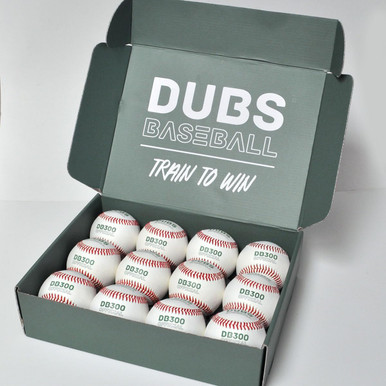
| DB300 - Dozen Practice Baseballs | Practice | Raised | 12-pack | Small practice sets, cages |
| DB300-36 - Bucket with 3 Dozen Practice Baseballs | Practice | Raised | 36-pack bucket | Team buckets, machines |
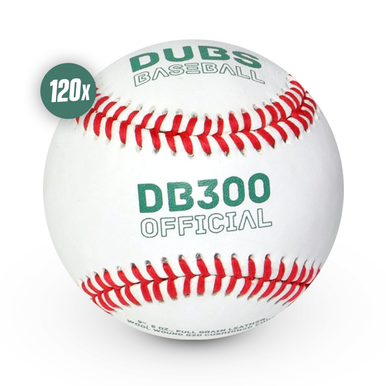
| DB300-120 - Case of 10 Dozen Practice Baseballs | Practice | Raised | 120-pack case | Full-season team supply |
| DB100 - Dozen Game Baseballs | Game | Flat | 12-pack | Games and practice |
| DB100-36 - Bucket with 3 Dozen Game Baseballs | Game | Flat | 36-pack bucket | Team game and practice buckets |
| DB100-120 - Case of 10 Dozen Game Baseballs | Game | Flat | 120-pack case | Full-season game supply |
| DMB-300-36 Bucket with 3 Dozen Foam Balls | Foam training | Not stated | 36-pack bucket | Reduced-impact training |
You can see the DB300 dozen practice baseballs and their specifications before you choose a format.
DB300-36 - Bucket with 3 Dozen Practice Baseballs →
Baseballs for Batting Practice and Pitching Machines
Batting practice and pitching machines are the heaviest-use settings for any practice ball. The DB300 listing names pitching machines, tee work, front toss and BP in the cages as its intended uses, along with turf carts and buckets for defensive and pitching work.
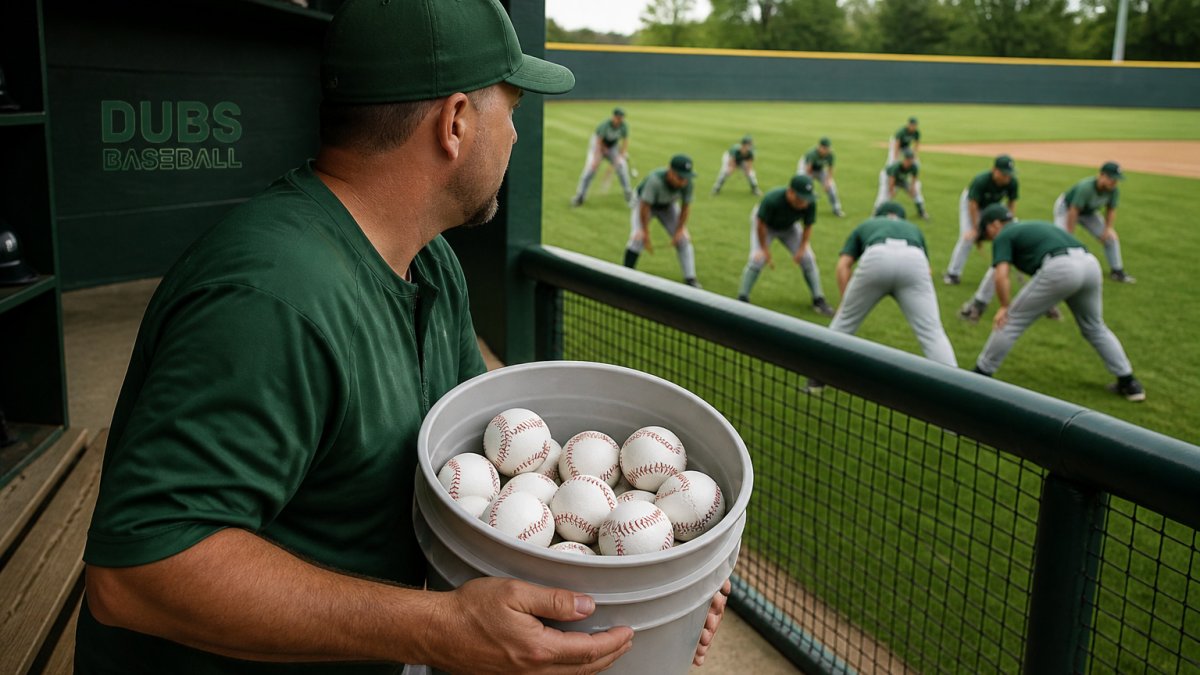
For pitching machines, pick the format that matches session volume.
Coaches who run machines often should note that foam training balls are a separate category.
Bulk Baseballs for Teams: Cost per Ball and Budget Planning
Bulk buying only saves money if the pack size matches how many balls your program actually retires in a season. The three Dubs Baseball formats, a 12-ball dozen, a 36-ball bucket and a 120-ball case, are the same ball in different quantities, so the decision is purely about cost per ball versus storage and cash flow.
Here is the math a coach should run before ordering:
- Cost per ball: Divide the pack price by the number of balls. A 120-ball case always has the lowest cost per ball of the three formats; a 12-ball dozen has the highest. The bucket sits in between. Check current prices on each product page, because pricing depends on quantity, dates and availability.
- Balls retired per season: Estimate practice sessions per week, balls used per session, and the share you expect to lose (foul balls, fence balls) or retire (out of round, seam failure). A youth team running two sessions a week may retire a bucket over a season; a high school program running daily practices and machine sessions may need a case.
- Cash flow versus storage: A case ties up more budget up front and needs dry storage space. A bucket is easier to phase in and restock.
Replacement criteria matter as much as purchase price. Consider retiring a ball when any of these appear:
- The cover is scuffed through to the winding, or a seam is split.
- The ball wobbles when rolled on a flat surface (out of round).
- The ball feels noticeably lighter or softer than a new one from the same pack.
- A pitching machine throws it inconsistently compared with fresh balls from the same bucket.
Keep balls dry and out of direct sun when storing them between sessions.
For exact per-ball costs and current pack pricing, check each product page on the Dubs Baseball site. The practical rule: match pack size to measured retirement, restock from the same line so every player works with identical balls, and replace on the criteria above rather than on a calendar.
Choosing Your Team's Baseballs and Next Step
Start with the use. Choose DB300 practice balls for high-volume buckets, machines and cages. Choose DB100 game balls when players need game-spec seams for live play. Choose bulk cases when you have a predictable season's volume and want the lowest cost per ball.
If your program runs one tight rotation, a single bucket may be enough to test before buying a case. Our recommendation for most team practice settings is to match the pack size to your weekly ball use, then restock from the same line so every player works with identical balls.
When you are ready to order a full-season supply, the DB100 case of 10 dozen game baseballs is the place to compare game-spec cases and place an order.

Frequently Asked Questions
What are practice baseballs for?
Practice baseballs are used for drills where balls get hit, thrown, fielded and pitched repeatedly, such as batting practice, tee work, front toss, infield and outfield reps, and pitching machine sessions. They are built to absorb more wear than a game ball and to be replaced affordably. Buying them in buckets or cases keeps a team supplied without paying game-ball prices for every rep.
What baseballs are best for team practice?
For most teams, the best practice baseball is one that holds up to frequent use, stays consistent in weight and size, and fits the team's level. Cowhide covers with raised seams and cork-and-wool cores are a common choice for high school and college practice. Dubs practice balls, such as the DB300 line, are positioned for buckets, pitching machines, tee work and front toss.
How many baseballs does a team need for practice?
A common starting point is enough balls that each player can get reps without waiting, plus a reserve for losses and wear. Many coaches plan around a dozen or more balls per station, and a 36-ball bucket or a 120-ball case covers larger rosters or multiple practice stations. Track how many balls leave the cage or field each week to estimate what to reorder.
How do practice baseballs differ from game baseballs?
Practice baseballs are typically built for durability and volume, while game baseballs are made to official specifications for play. The Dubs DB300 practice ball and DB100 game ball both use cowhide covers, cork centers and wool winding, but the DB100 uses flat seams and heavier wool winding for official play, while the DB300 uses raised seams.
Are machine-pitch baseballs suitable for regular team practice?
Yes, when the ball is rated for machine use and the team has a consistent feeding setup. Look for a ball described as suitable for pitching machines. Dubs DB300 and DB100 balls are listed for use in pitching machines, tee work and front toss.
