

5 Bulk Baseball Options for Teams
Posted by Editorial Team on 2026 Oct 16th
Table of Contents
- Understanding Bulk Baseball Options for Teams
- Game Baseballs vs Practice Baseballs: What Your Team Needs
- Option 1: Individual Dozen Game Baseballs for Small Teams
- Option 2: Bucket Packages with Youth Practice Baseballs
- Option 3: 36-Pack Bucket with Game Baseballs for Competitive Teams
- Option 4: Large Case Orders for Batting Practice Baseballs
- Option 5: Mixed Bulk Orders for Comprehensive Training Programs
- How to Choose the Right Bulk Baseball Option for Your Team
- Frequently Asked Questions
Last Updated: October 16, 2026
Understanding Bulk Baseball Options for Teams
Buying baseballs in bulk is one of the smartest investments a team can make. Whether you run a youth program, a high school roster, or a training facility, the right bulk baseball options save money, reduce downtime, and keep quality equipment on hand.
The key is matching your purchase to what your team actually needs. Game baseballs, practice baseballs, bucket packages, and large case orders each serve different purposes and budgets.
Below, we'll walk through five practical bulk baseball options for different team sizes, league levels, and training priorities, plus a framework for calculating what your team needs and which option delivers the best value.
Game Baseballs vs Practice Baseballs: What Your Team Needs
Understanding the difference between game and practice baseballs is the foundation for choosing the right bulk baseball options. They aren't interchangeable, and buying the wrong type wastes money.

Game Baseball Construction and Use
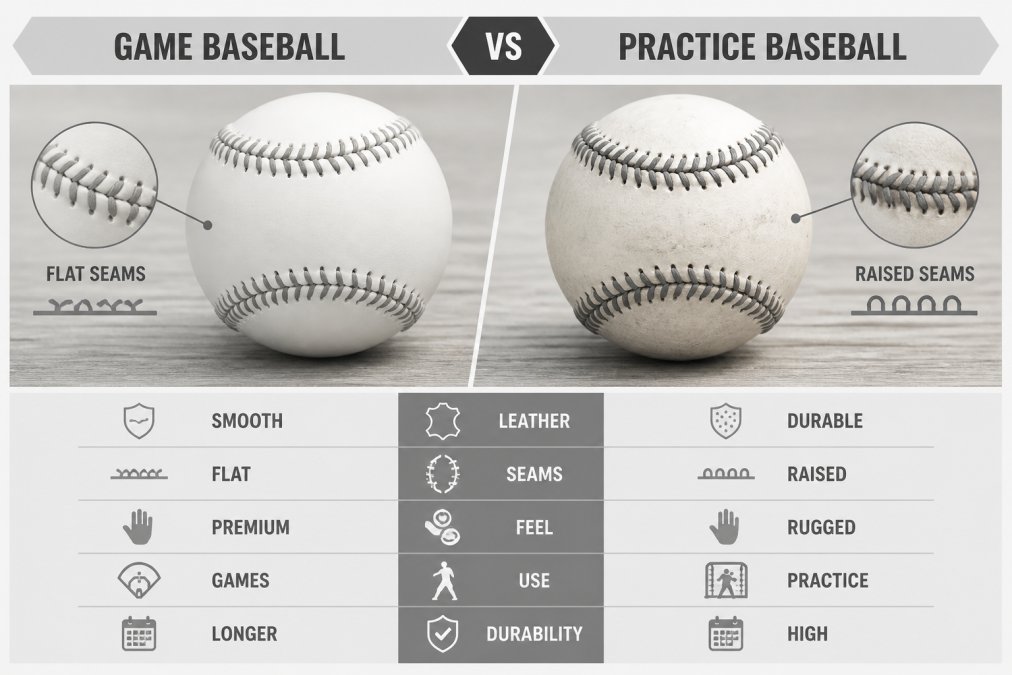
Game baseballs are built to official specifications: flat seams, cowhide leather, a rubber-covered cork center, and tighter winding for consistent flight and performance in competitive play.
The flat seam design reduces drag for predictable movement, and the 85% grey wool winding provides durability through an entire game. Game baseballs meet official league standards and are required for sanctioned competition.
Game baseballs cost more per unit because of these materials and standards, but they last through multiple games when handled properly. For competitive programs and official league play, they're mandatory.
Practice Baseball Construction and Use
Practice baseballs use raised seams and the same cowhide leather, but with a rubber-covered cork center and only 15% grey wool winding. The raised seams create more pronounced grip for drills, and the lower wool content makes them slightly less durable than game balls but adequate for practice.
Practice baseballs absorb the wear of repetitive drilling, batting practice, infield work, and pitching sessions. They're tougher than casual tossing requires but not built for competitive play, and the lower cost per unit makes sense when you burn through dozens per week.
Many teams use practice baseballs in batting cages, for front toss, and for defensive drills where raised seams help fielders practice proper glove work. Youth leagues often use them for games when regulation balls aren't required, extending the life of pricier game inventory.
Option 1: Individual Dozen Game Baseballs for Small Teams
This is the entry point for bulk baseball options: a single dozen of official game baseballs, best for small teams with limited budgets or those just starting to build inventory.
The DB100 - Dozen Game Baseballs from Dubs Baseball gives you 12 official-specification game baseballs with flat seams, cowhide leather, and the 85% grey wool winding that meets league standards. Each ball is 9 inches and 5 ounces, matching official dimensions.
It's ideal for travel teams playing 20-30 games per season, small competitive clubs, or coaches testing quality before larger orders. You get enough balls to rotate through a game with backups, without overcommitting budget.
The limitation: a dozen runs out quickly if you also run regular practices. Many teams use this as their game-ball reserve and pair it with practice baseballs for workouts.
Option 2: Bucket Packages with Youth Practice Baseballs
When you need practice inventory without the game-ball price tag, bucket packages with practice baseballs solve the problem efficiently.
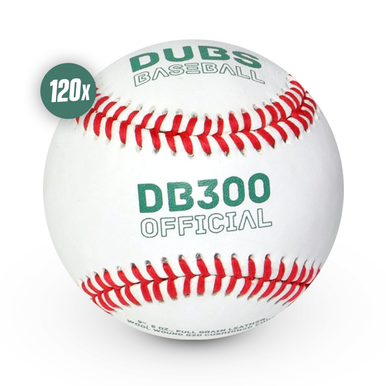
The DB300-36 - Bucket with 3 Dozen Practice Baseballs includes 36 raised-seam practice baseballs and a bucket for storage and transport. The raised seams improve practice quality: fielders get better grip feedback and hitters face more realistic pitch movement.
This is the sweet spot for youth programs and training facilities running multiple practices per week. Thirty-six balls cover simultaneous drills, cage work, and infield rotations without constant retrieval, and the bucket keeps everything portable between fields.
Many coaches pair this with a smaller game-ball order: practice baseballs for all workouts, game baseballs reserved for competition, and worn practice balls rotated out. This maximizes the lifespan of your expensive game equipment.
Option 3: 36-Pack Bucket with Game Baseballs for Competitive Teams
When you need serious game-ball inventory, the bucket package with game baseballs balances quantity and cost.

The DB100-36 - Bucket with 3 Dozen Game Baseballs gives you 36 official-specification game baseballs in an included bucket. These are the same flat-seam, 85% grey wool game balls as the individual dozen, just in larger quantity.
This works for competitive high school programs, travel teams playing 40+ games per season, and facilities running regular games or scrimmages.
The included bucket keeps game balls organized, protected, and easy to transport between fields or from storage to the diamond, rather than scattered across equipment bags.
This is where bulk baseball options start delivering real per-unit savings versus individual dozens, without committing to the massive case orders only large programs need.
Option 4: Large Case Orders for Batting Practice Baseballs
For programs running intensive batting practice or facilities with high daily usage, the large case order of practice baseballs is the most economical bulk baseball option.
The DB300-120 - Case of 10 Dozen Practice Baseballs delivers 120 practice baseballs in 10 boxes of a dozen each. This is 10 times the quantity of the bucket package, which is what high-volume operations actually need.
Batting cages, training academies, and large competitive programs burn through practice baseballs fast.
DB100-120 - Case of 10 Dozen Game Baseballs →
The raised-seam practice baseballs are perfect for cage work, front toss, and pitching practice where consistency matters but game-ball specs aren't required. Many facilities use practice baseballs exclusively for instruction, reserving game balls for competition.
Ordering by the case significantly reduces per-unit cost, making it the most cost-effective approach for facilities with consistent, high-volume usage.
Option 5: Mixed Bulk Orders for Comprehensive Training Programs
The most flexible approach combines game and practice baseballs in a single order tailored to your needs.
Many teams pair the DB100-120 - Case of 10 Dozen Game Baseballs with practice-ball inventory: 120 game baseballs for competition plus separate practice stock.
This bulk baseball option suits programs with diverse needs: competitive games, regular practices, training camps, and player development. You're not forcing practice players to use game-ball inventory or running games with practice equipment.
A mixed approach also protects your investment: game baseballs last longer reserved for actual games, while practice baseballs absorb daily wear.
Mixed orders let you scale with your season: practice balls for off-season skill development, game-ball inventory added pre-season, and mid-season reorders of whichever type depletes faster.
How to Choose the Right Bulk Baseball Option for Your Team
Picking the right bulk baseball option requires honest assessment of three factors: team size, usage patterns, and budget.
Assess Your Team's Size and League Level
Start with your roster: a 12-player team has different needs than a 40-kid program rotating through multiple age groups.
Youth recreational leagues often use practice baseballs for games, so your primary investment is practice inventory. Competitive travel teams need game-ball inventory for sanctioned play. High school and college programs need both, in significant quantities.
League level also determines durability requirements: youth recreational play is gentler on equipment, so baseballs last longer at lower intensity levels, affecting how many you need.
A 12-player competitive team playing 30 games might need 36 game baseballs and 24-36 practice baseballs. A 40-player youth program with multiple age groups might need 120+ practice baseballs and only 24-36 game baseballs if games use practice balls.
| Team Type | Typical Size | Game Ball Needs | Practice Ball Needs | Recommended Bulk Option |
|---|---|---|---|---|
| Small travel team | 12-15 players | 24-36 | 12-24 | Individual dozen or bucket |
| Youth competitive | 20-30 players | 36-48 | 48-72 | Bucket + case combination |
| High school program | 30-50 players | 60-120 | 72-120 | Multiple buckets or mixed case |
| Training facility | Varies | 36-60 | 120+ | Large case orders |
Calculate Usage and Replacement Frequency
Usage is where most teams underestimate. A single practice with 15 players might use 20-30 baseballs across drills; add fielding work, batting practice, and pitcher development, and inventory burns fast.
Lost balls are real: foul balls go over fences and balls get kicked into the woods. Estimate losing 5-10% of inventory per season, so you need replacement stock beyond your active practice count.
Damaged balls add up too: baseballs hitting concrete or metal bleachers get scuffed and dented, and after 50-100 cage or aggressive practice uses, a practice baseball shows wear. Plan to replace 10-15% of practice inventory annually.
A quick calculation: practicing twice weekly for 24 weeks at 25 balls per session equals 1,200 practice ball uses per season.
Budget Planning and Bulk Pricing
Bulk baseball options deliver savings only if you buy what you actually need. Overbuying wastes money; underbuying forces higher per-unit costs mid-season.
A practical approach: calculate annual usage from team size and practice frequency, then buy enough to cover the full season plus 15% replacement stock.
Dubs Baseball's bulk baseball options match different team sizes and budgets. Whether you need 12 game baseballs or 120 practice baseballs, match the order size to your actual usage pattern.
Order too much and you're sitting on inventory that could be invested elsewhere; order too little and you pay premium per-unit prices for mid-season restocks.
Choosing the right bulk baseball option comes down to understanding your team's actual needs.
Frequently Asked Questions
What is the difference between practice baseballs and game baseballs?
Game baseballs have flat seams and 85% grey wool winding, designed to meet official league specifications for competition. Practice baseballs have raised seams and 15% grey wool winding, making them more durable for repeated use in training. Both are 9 inches and 5 ounces, but the construction differences mean practice balls withstand the wear of drills and machine use better, while game balls maintain consistent flight and feel for official play.
How many baseballs does a team need for practice?
Team size and practice intensity determine your needs. A youth team of 12-15 players typically requires 36-48 baseballs for effective drills. High school and college teams with larger rosters and daily practice often use 120+ baseballs to account for losses and wear. Consider that pitching machines, batting cages, and fielding drills consume balls quickly, so bulk options like 36-pack or 120-pack cases ensure you always have fresh inventory without frequent reordering.
Are bulk baseballs worth buying for a team?
Yes, bulk purchasing saves money per unit and reduces ordering frequency. Teams that buy individual dozens spend more over a season than those ordering 36-packs or full cases. Bulk options also guarantee consistent supply for year-round training programs, indoor facilities, and camps. The investment pays off through lower per-ball costs, less administrative time managing orders, and the ability to maintain equipment standards across your entire roster and training schedule.
What baseballs are best for batting practice?
Practice baseballs are ideal for batting practice because their raised seams and durable construction withstand repeated machine pitching and bat contact. They're designed for high-volume use in cages and during front toss drills. Game baseballs can be used for batting practice too, especially in competitive settings where players need to prepare with official-spec balls, but practice baseballs offer better value and longevity for regular training sessions.
How long do practice baseballs last?
Practice baseballs typically last one season or longer depending on usage intensity and storage conditions. High-volume use in pitching machines and batting cages may reduce lifespan to 3-6 months, while moderate practice use can extend it to a full season or more. Proper storage in dry conditions and regular inspection for cover damage help maximize durability. Bulk purchasing accounts for replacement needs, ensuring your team always has game-ready equipment.